
Hooded eyes aren’t always caused by excess eyelid skin. A low brow, changes in skin elasticity, or age-related shifts in the tissues around the eyes can also contribute, so blepharoplasty for hooded eyes is tailored to the anatomy behind the heaviness. The procedure can remove or reposition excess skin, muscle, or fat to create a more open-looking upper eyelid.
If your upper lids feel heavy or seem to cover more of your eyes, you may be wondering whether blepharoplasty for hooded eyes is the right solution. The cause matters: eyelid skin, brow position, and other changes around the eyes can call for different approaches. An examination helps clarify what is contributing.
This guide explains what hooded eyes are and what may cause them, how blepharoplasty works, and what to expect from outpatient surgery, recovery, and potential risks. You’ll also learn how healing unfolds and what aspects of care support a thoughtful, natural-looking result.
Key Takeaways
- Hooded appearance can involve the eyelid, brow, or surrounding tissues, so understanding its cause helps clarify which treatment may fit.
- Upper eyelid surgery can remove or reposition tissue; treatment planning considers the eye area as a whole and aims to preserve a natural appearance.
- Outpatient eyelid surgery generally allows patients to recover at home, but arranging a ride and support afterward is an important part of planning.
- Swelling and bruising are part of recovery, and healing continues beyond the point when you may feel ready to resume usual activities.
- Learn about potential complications, including dry or irritated eyes, and how a personalized surgical evaluation can help guide decisions.
What are hooded eyes?
Hooded eyes describe an upper eyelid partly covered by skin or a low brow. This appearance can be inherited or develop as skin elasticity and facial support change.
Appearance and Vision Effects
When excess upper-eyelid skin folds over the crease, the visible lid space can look smaller or heavier. A low brow can add to that effect, so identifying the source of hooding matters when considering eyelid surgery. In more severe cases, skin may extend over the lashes and interfere with peripheral vision. Hooding can therefore affect both facial balance and how much of the surrounding view remains unobstructed.
Cosmetic and Vision-Related Reasons
People may consider surgery to reduce loose upper-eyelid skin or address drooping that limits peripheral vision. Cosmetic concerns involve appearance; vision-related concerns involve eyelid tissue obstructing the field of view. An eye doctor may test vision before surgery, according to the National Library of Medicine. Those findings can help distinguish an aesthetic goal from a functional concern and guide further evaluation.
Blepharoplasty for hooded eyes is surgery that removes or repositions excess upper-eyelid skin, muscle, or fat. The procedure may suit someone whose eyelid anatomy and goals can be addressed by surgery, whether the concern is appearance, vision, or both. A clinician assesses the eyelids and brow together because brow droopiness can also contribute to upper-lid heaviness.
For upper eyelid surgery, the incision is placed within the natural eyelid crease, where it can be less conspicuous. Through that incision, the surgeon removes or repositions tissue based on your anatomy. A conservative approach may remove skin while preserving a natural eyelid shape. The plan depends on whether excess skin, muscle, or fat contributes to the hooded appearance.
The procedure is commonly performed with local anesthesia and sedation. After surgery, stitches are usually present for about a week, while bruising and swelling generally ease within 10 to 14 days. These recovery changes can temporarily affect the eyelid’s appearance, so early healing is not the final result. The operation’s goal is to address the identified tissue without treating every hooded eyelid as if it has the same cause.
Vision testing helps assess whether drooping skin obstructs the field of view. An eye doctor may evaluate vision before surgery, and an eyelid lift may be medically needed when drooping reduces vision, according to the National Library of Medicine. Upper eyelid surgery may be covered by insurance when it repairs a vision-impairing condition; surgery performed only to improve appearance is not covered.
Postoperative care and recovery
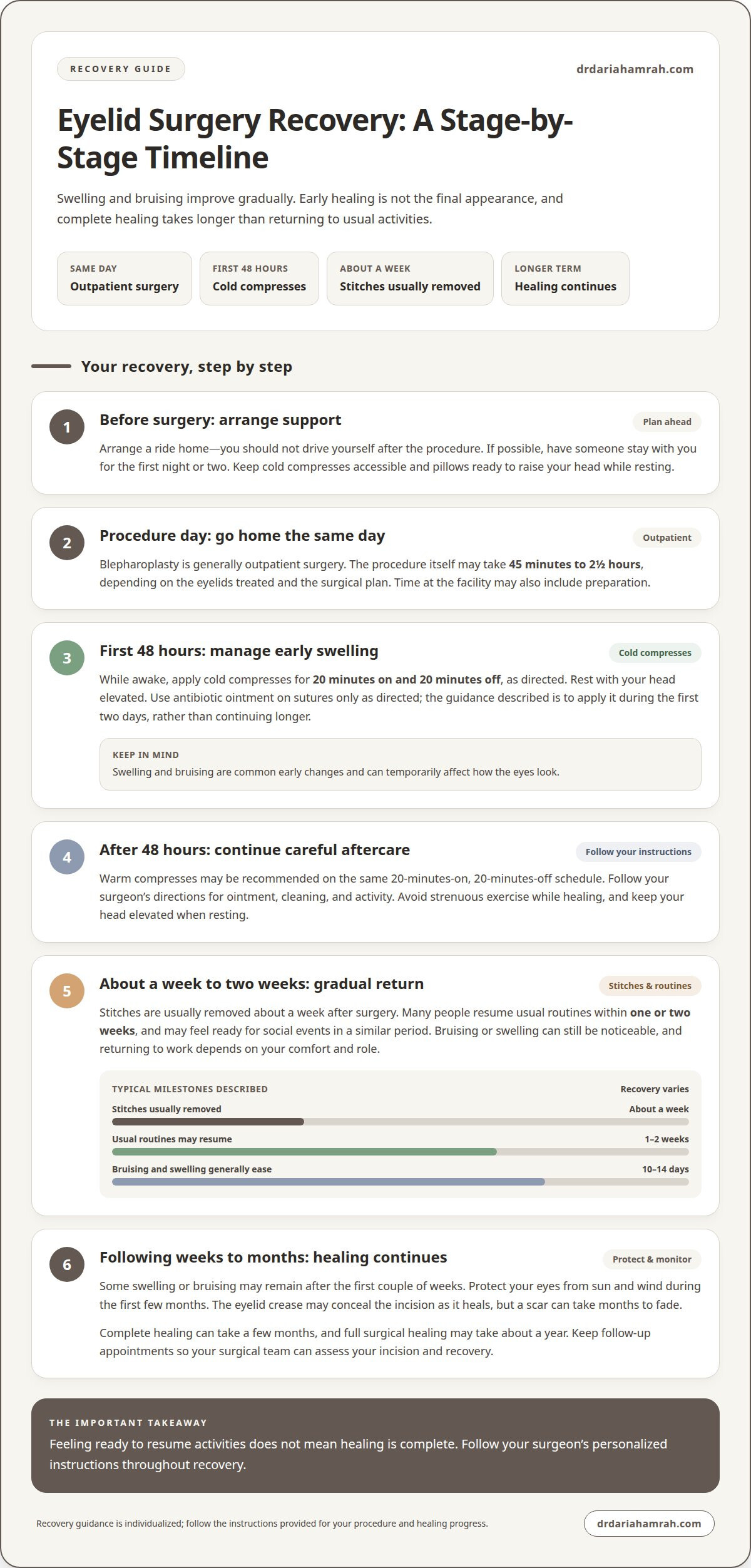
Recovery unfolds in stages: early care focuses on swelling, while healing and scar maturation take longer. Follow your surgeon’s instructions for compresses, ointment, activity, and follow-up when recovering from a blepharoplasty for hooded eyes.
Swelling and Bruising
Swelling and bruising are common early changes after eyelid surgery, and they can temporarily alter how the eyes look. During the first 48 hours, apply cold compresses for 20 minutes on and 20 minutes off while awake, as directed. After that period, warm compresses may be recommended on the same schedule. Sleeping with your head elevated can also help manage swelling during this healing phase.
Aftercare and Recovery Time
Aftercare protects healing eyelids while you gradually return to normal activity. Stitches are usually removed about a week after surgery, and many people resume usual routines within one or two weeks. Follow your surgeon’s instructions for ointment, cleaning, and activity, and avoid strenuous exercise during recovery. Guidance from Dr. Daria Hamrah reflects the specific procedure performed and your individual healing progress.
Expected Recovery Results
Recovery results change over time, so early swelling doesn’t show the final appearance. Bruising and swelling generally subside within 10 to 14 days, though some patients may still notice changes afterward. Many people feel ready for social events within one to two weeks, but mild bruising or swelling may remain. Complete healing can take a few months, and full surgical healing may take about a year.
Use antibiotic ointment only as directed by Dr. Daria Hamrah. Applying it to sutures during the first two days after surgery, rather than continuing longer, helps reduce the chance of irritation. Don’t add products or change the schedule without following your postoperative instructions. The eyelid crease may conceal the incision as it heals, but the scar can take months to fade.
Plan practical support before surgery. Arrange a ride home, since you shouldn’t drive yourself after the procedure, and, if possible, have someone stay with you for the first night or two. Keep cold compresses accessible during the first 48 hours, and rest with your head raised on pillows. Avoid strenuous exercise while healing, and protect the eyes from sun and wind during the first few months.
Returning to work depends on your comfort, how visible bruising is, and the demands of your role. Some people resume usual routines after a week or two, while feeling ready for social activities may take a similar period. Keep follow-up appointments so the surgical team can assess the incision and your recovery. If vision changes or unexpected symptoms arise, contact Dr. Daria Hamrah promptly for guidance.
Procedure duration and outpatient surgery
Blepharoplasty is generally performed as outpatient surgery, so patients return home the same day. The procedure itself may take 45 minutes to 2 and a half hours, depending on the eyelids being treated and the surgical plan. The time spent at the facility may also include preparation and initial recovery, not only the operation itself.
Upper eyelid surgery may use local anesthesia with sedation. Arrange a ride to and from the surgical facility, since you can’t drive yourself after surgery. Plan where you’ll rest at home and keep your postoperative instructions accessible. Preparing ahead helps you focus on recovery without having to manage transportation or basic arrangements alone.
During a consultation, ask which tissues contribute to your droopy eyelids, what the procedure will address, and what anesthesia will be used. Ask how the plan accounts for eyelid skin, brow position, and your desired appearance. Also ask about follow-up, recovery expectations, and whom to contact if a problem develops. These questions clarify the approach and the support available afterward.
When choosing a surgeon in the United States, consider their experience with eyelid procedures and whether they are a board-certified plastic surgeon. An in-person examination can assess eyelid skin, brow position, and surrounding structures. This helps distinguish excess eyelid skin from heaviness associated with a low brow, which can change the treatment plan. Your consultation should also cover the clinic setting and planned anesthesia.
After surgery, cold compresses are advised for 20 minutes on and 20 minutes off while awake during the first 48 hours. After that initial period, warm compresses may be used for 20 minutes on and 20 minutes off. Follow the operating surgeon’s instructions for your care, including when to change compress types and how to protect healing eyelids.
Outpatient care means recovery begins at home, not that follow-up is unnecessary. Keep the surgical team’s contact details available and follow the scheduled review plan. If a problem arises or a change concerns you, contact the team promptly instead of adjusting treatment yourself. Clear communication helps the team assess the issue and advise you on an appropriate next step.
Before choosing surgery, make sure the discussion covers your appearance goals and any vision concerns. If drooping affects peripheral vision, an eye doctor may test your vision before surgery. Those findings can help clarify whether the concern involves functional obstruction or is primarily cosmetic. Your consultation should connect the examination, surgical plan, anesthesia, and recovery expectations so you understand how each relates to your eyelids.
Surgical risks and complications
Blepharoplasty can reduce excess upper-eyelid skin and make the eyes appear more open. Like other cosmetic surgery, it also involves risks that deserve a clear discussion before you decide. The balance depends on your anatomy, brow and eyelid position, and whether your goal is cosmetic or related to vision. Understanding possible complications helps you weigh potential benefits against the demands of surgery.
Known risks include infection, bleeding, and reactions to anesthesia. Upper eyelid surgery can also leave the eyes dry or irritated, and dry-eye symptoms may last for a few weeks after surgery. These effects can matter during daily activities such as reading or using screens. Mention any existing eye irritation during your preoperative discussion so the surgical plan considers your eye health and the tissues being treated.
Bruising and swelling are expected parts of healing, unlike complications such as infection or persistent irritation. A scar may look visible or feel tight for a few months as it heals. Upper eyelid surgery incisions are placed in the eyelid crease, where they can be less conspicuous. Their position does not rule out a visible scar, so discuss scar healing and aftercare before surgery.
Preparation can help reduce some avoidable risks. Patients are advised to avoid certain medications and smoking before blepharoplasty to reduce bleeding risks and support healing. Appropriate changes depend on the medication and your health history, so discuss them with the surgical team rather than stopping a prescribed medicine on your own. Following preoperative instructions gives the team a chance to plan around factors that could affect bleeding or recovery.
The amount of tissue removed matters. A conservative plan may remove excess skin while preserving a natural eyelid shape; the goal isn’t simply to remove as much skin as possible. The surgeon evaluates eyelid and brow position together because a low brow can contribute to upper-lid heaviness. Matching the procedure to the source of hooding helps align the surgical approach with your cosmetic or functional goals.
Before proceeding, ask the surgeon to explain the likely benefits for your eyelids, the risks that apply to your health, and how complications would be assessed. Clarify which changes are expected during healing and which should prompt a call to the surgical team. Discussing infection, bleeding, anesthesia reactions, dry eyes, and scarring gives you a more complete basis for informed consent.
What causes hooded eyes
Hooded eyes can reflect changes beyond the upper eyelid. Inherited eyelid shape, aging, reduced skin elasticity, and rapid weight loss can contribute to excess skin or a heavier appearance. A low brow may also make the upper lid look heavier. Identifying the structure involved matters because removing eyelid skin won’t address every cause of hooding.
Sometimes drooping eyelids have a medical cause rather than reflecting a gradual change in appearance. Conditions associated with drooping include diabetes, Horner syndrome, myasthenia gravis, stroke, tumors, and eyelid swelling. These conditions affect people differently, but their presence can change how eyelid drooping is assessed. A clinician’s evaluation helps distinguish loose skin from drooping associated with an underlying condition.
Consider the brow and eyelid together. Brow droopiness can add heaviness above the crease, while excess upper-eyelid skin can fold over the lid itself. Lower-eye bags or hollowing may also influence the overall appearance, even though they don’t explain every case of upper-lid hooding. That’s why the brow, forehead, and eye area are considered together when planning treatment.
This distinction guides discussion of upper blepharoplasty. If loose upper-eyelid skin is the main contributor, surgery may focus on removing a measured amount of skin. If brow position contributes to the hooded appearance, eyelid surgery alone may not address that cause. A careful assessment considers the location of the fold, brow position, and whether drooping affects vision.
An upper-eyelid incision is typically placed in the natural crease, allowing the healed line to be less conspicuous. Depending on your anatomy, the surgical plan may address skin, muscle, or fat. A conservative approach can preserve natural eyelid structure rather than removing tissue simply to create a larger-looking lid. Reconstructive needs and cosmetic goals differ, so the reason for surgery informs the plan.
Consider how the change developed, whether one or both eyelids are affected, and whether your vision feels obstructed. These observations can help frame an in-person examination, but they don’t identify the cause on their own. A clinician assesses the eyelid, brow, and surrounding tissues together, then considers whether loose skin, brow descent, or a medical condition best explains the appearance.
If you’re considering surgery, an in-person eyelid assessment can help clarify which structures contribute to the hooding and whether upper eyelid surgery fits your goals.
Dr. Daria Hamrah: Blepharoplasty
Dr. Daria Hamrah offers blepharoplasty for people considering surgery for hooded or drooping upper eyelids. An evaluation can help clarify whether excess eyelid skin, brow position, or another feature contributes to the appearance, and whether eyelid surgery fits your goals. This distinction matters because treatment planning should reflect your anatomy, not just the visible fold.
As a board-certified facial cosmetic surgeon, Dr. Hamrah can discuss the procedure, its potential risks, and recovery considerations to help you make an informed decision. If your main concern is eyelid heaviness or excess upper-lid skin, a consultation about blepharoplasty is a practical next step.
Contact Dr. Daria Hamrah to discuss your eyelid concerns.
Make Your Next Step an Informed One
Choosing blepharoplasty for hooded eyes is not simply a decision about changing your appearance. It’s an opportunity to consider what feels right for your face, your priorities, and your comfort with surgery. Take time to define the change you hope to see, then discuss those priorities openly during a personalized consultation.
A thoughtful conversation can help you understand how your goals relate to your eyelid anatomy and whether surgery is an appropriate path. Use the consultation to raise any remaining concerns about the procedure or recovery, without feeling rushed to decide. A clear, considered choice is a meaningful start.
Contact Dr. Daria Hamrah to discuss your goals and possible next steps. You deserve to approach the decision with clarity and confidence.
Frequently Asked Questions
How much does it cost?
The cost depends on the details of your procedure. Dr. Daria Hamrah’s Price Estimator provides an instant, personalized estimate with no commitment. Factors that shape an estimate include the extent of treatment, whether one or both upper eyelids are addressed, and the surgical plan. A personalized estimate can help you understand the financial commitment before deciding whether to proceed.
What Is Blepharoplasty?
Blepharoplasty is eyelid surgery that can address loose skin and, when appropriate, underlying muscle or fat. Upper eyelid surgery focuses on the upper lids; lower eyelid surgery addresses concerns below the eyes. The procedure may be considered for appearance or, when drooping obstructs vision, for a functional concern. The area treated depends on your anatomy and what you hope to address.
What does it involve?
The process begins with an assessment of the eyelids and nearby structures, followed by a surgical plan based on the tissues contributing to your concern. For example, a plan may focus on upper eyelid skin rather than treating the lower lids. The surgeon explains the incision location, anesthesia, and intended tissue changes before surgery. Afterward, follow individualized care instructions and attend follow-up visits so healing can be assessed.
What happens during eyelid surgery?
During upper eyelid surgery, the surgeon marks the planned incision along the eyelid crease, then removes or repositions selected tissue. Local anesthesia with sedation is commonly used for this procedure. After the incision is closed, you recover before going home with transportation arranged. The exact approach depends on whether skin, muscle, or fat contributes to your concern and on the agreed surgical plan.
What is the difference between upper blepharoplasty and a brow lift for hooded eyes?
Upper blepharoplasty addresses excess tissue at the upper eyelid, while a brow lift raises the brow when its lower position contributes to heaviness. This distinction matters when the fold above the eye comes partly from brow descent rather than eyelid skin alone. Assessing the brow and eyelids together helps identify which area contributes to the appearance and whether one approach or both may be appropriate.
How much does upper eyelid blepharoplasty cost in the United States, and does insurance cover it?
There is no single cost for every upper eyelid procedure; an estimate depends on the individual surgical plan. In the United States, insurance may cover surgery that repairs a condition impairing vision, while surgery performed only to improve appearance isn’t covered. If drooping seems to obstruct your view, vision testing can help document the functional concern for a coverage assessment.
How long does recovery from blepharoplasty for hooded eyes take?
Many people return to usual routines within one or two weeks, while complete healing takes longer. Bruising and swelling generally ease within 10 to 14 days, but subtle changes may continue as tissues settle. For example, looking ready for a social event doesn’t mean the eyelids have finished healing. Keep activity and follow-up plans aligned with your surgeon’s instructions rather than judging recovery by appearance alone.
What are the risks and complications of upper eyelid blepharoplasty?
Potential complications include infection, bleeding, reactions to anesthesia, scarring, and dry or irritated eyes. Dry-eye symptoms may last for a few weeks, and scars can remain visible or feel tight for a few months. Before surgery, discuss your eye health, medications, and smoking with the surgical team. Ask which changes are expected during healing and which symptoms should prompt you to contact the team.