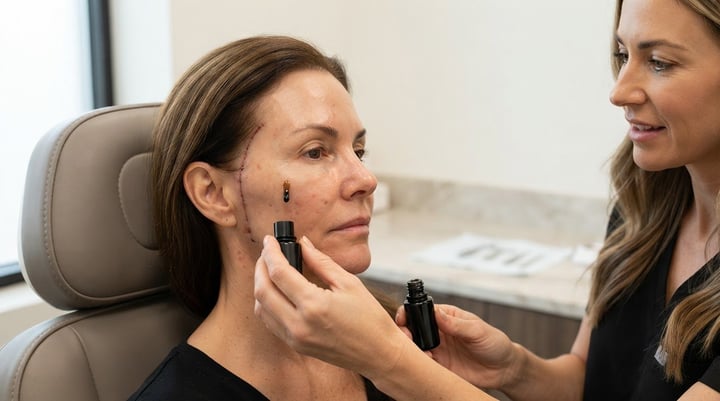

Clearer-looking skin can start with a single treatment, but lasting change in dark spots usually takes a considered plan. A hydrafacial for hyperpigmentation uses gentle exfoliation and serum infusion to refresh the skin’s surface. Some people notice a more even-looking tone after one session, but deeper or long-standing discoloration may need more than exfoliation alone.
It’s understandable to hope one facial will erase sun spots or marks left after breakouts. HydraFacial may improve dullness and uneven surface tone, but the type and depth of pigmentation affect what it can achieve. Melasma, sun spots, and post-inflammatory pigmentation have different causes, so they may respond differently.
This guide explains how the treatment works, what immediate and longer-term results may look like, and where its limits matter. You’ll also learn how pigmentation type, skin tone, and complementary treatments can shape a thoughtful approach to brighter, more balanced-looking skin.
Key Takeaways
- HydraFacial exfoliation can refresh the skin’s surface and may improve the appearance of mild discoloration, but it may not resolve deeper or long-standing pigment.
- Sun spots, post-inflammatory pigmentation, and melasma have different causes, so identifying the type of discoloration helps shape a more appropriate treatment plan.
- Some people notice a brighter, more even-looking complexion after one session, while gradual changes may require a series of treatments and consistent skincare.
- Combining exfoliating facials with lasers or other procedures calls for careful timing to reduce the risk of irritation and unwanted pigmentation.
- Learn what HydraFacial may realistically achieve, how results can develop over time, and when another approach may be worth considering.
Combining HydraFacial with other treatments
Combining a HydraFacial with another procedure calls for a clear sequence, not simply adding treatments together. A HydraFacial typically involves cleansing, exfoliation to lift dead skin cells, extraction of impurities, and serum infusion. This refreshes the surface, while another treatment may target a different concern. Planning around your skin’s response helps avoid stacking exfoliation and irritation.
The cause of pigmentation and your skin tone both shape treatment planning. Sun spots, melasma, and post-inflammatory pigmentation don’t behave alike, and skin prone to post-inflammatory pigmentation can darken after irritation. An arbutin booster is one example of an ingredient used with HydraFacial for discoloration concerns. For sensitive skin, the clinician should consider treatment intensity and ingredients alongside your history of irritation.
Laser treatments can target discoloration, including sun spots, but timing matters after exfoliation. One provider recommendation is to schedule laser treatment two to four weeks after a HydraFacial. This interval gives the skin time between procedures; the appropriate plan also depends on the cause of pigmentation and your skin tone. Combining treatments without considering these factors can increase irritation and the risk of unwanted pigment changes.
Other facial procedures also need thoughtful spacing. One provider recommends waiting two weeks after Botox before a HydraFacial, and four to six weeks between a HydraFacial and microdermabrasion or a diamond glow facial. For brow lamination, the suggested interval is at least one week. These examples show why timing matters: procedures that affect the skin shouldn’t be crowded together without considering their combined effects.
To prepare for a HydraFacial, share your skin sensitivity, pigmentation history, current skincare, and recent treatments during the appointment. Afterward, avoid direct or prolonged sun exposure for 24-48 hours, and use sunscreen daily as part of ongoing care. Recent sun exposure is relevant too: tell the clinician about it so they can account for your skin’s current condition when planning treatment.
To find a qualified HydraFacial provider near you in the United States, look for a practice that offers the treatment and can explain its steps, serum choices, and aftercare. A useful discussion covers your skin tone, the likely cause of discoloration, recent sun exposure, and how HydraFacial fits with any planned laser treatment. Clear answers help you understand the treatment plan before proceeding.
For example, someone addressing sun spots with both exfoliation and laser treatment needs a plan that spaces the procedures appropriately. Someone with sensitive skin or pigmentation after inflammation may need a different approach, with careful attention to ingredients and treatment intensity. The goal is a coordinated plan, not the greatest number of treatments. Each step should suit the pigmentation concern and the skin’s tolerance.
How HydraFacial exfoliation may address dark spots and uneven skin tone
During a HydraFacial session, gentle exfoliation loosens dead skin cells from the surface. Hyperpigmentation means an area contains more melanin than nearby skin, sometimes appearing brown, gray, or pink. Removing surface buildup can make uneven tone look fresher, while customized serums add hydration, antioxidants, and other selected ingredients. This process works at the skin’s surface; it doesn’t address every cause of discoloration.
HydraFacial is described as suitable for different skin tones and types, including sensitive skin, without discomfort or downtime. Still, suitability doesn’t mean every setting or serum suits every concern. A history of irritation, visible inflammation, or pigment changes after breakouts can affect how the treatment is tailored. Recent sun exposure matters, too, since the skin’s condition can influence how much exfoliation is appropriate.
Can HydraFacial worsen melasma or cause post-inflammatory hyperpigmentation, especially in darker skin tones? HydraFacial doesn’t directly treat the underlying tendency behind melasma, and irritation from a procedure can contribute to post-inflammatory pigmentation. Treatment choices should account for the cause of pigmentation and skin tone, because procedures that irritate susceptible skin may worsen discoloration.
Serums are selected to match individual concerns rather than treating every dark spot as the same problem. For example, a brightening serum may support a plan for uneven tone, while hydration can address dryness that makes skin look dull. An arbutin booster is one option used with HydraFacial for discoloration concerns. Ingredient selection and exfoliation intensity matter especially for sensitive skin or a history of inflammation.
Results build as the skin renews, so a single session may refresh the surface without resolving persistent pigment. One approach is a series of 3 to 6 HydraFacial treatments spaced a month apart, allowing changes to accumulate across sessions. The interval also gives the skin time to respond before the next treatment. Tracking changes in specific spots and overall tone can help show whether the plan is addressing the intended concern.
For sun-exposed skin, recent exposure should be part of the treatment discussion, especially if the skin feels irritated or looks inflamed. There isn’t one suitable exfoliation level for every skin tone or concern; the skin’s current condition and pigmentation history help guide the choice. A thoughtful personalized skin treatment plan can align serum selection and exfoliation with your goals.
Can Hydrafacial help reduce pigmentation or sun spots?
HydraFacial may improve dullness, mild congestion, and rough texture, including uneven-looking tone. Its surface-focused exfoliation has limits when discoloration is deeper or long-standing.
HydraFacial for Uneven Pigmentation
HydraFacial can refresh the skin’s surface and support a brighter appearance when uneven pigmentation accompanies dullness or rough texture. Exfoliation removes dead surface cells, while brightening serums may address discoloration concerns. This can make the complexion look more balanced, but it doesn’t mean every spot will fade equally. The depth, cause, and persistence of pigmentation influence what surface treatments can achieve.
Limits for Deeper Pigmentation
HydraFacial is a surface treatment, so it may not be enough for significant discoloration or deeper texture concerns. Deeper pigment and decades of sun damage are unlikely to disappear completely, and full eradication of pigmentation is rare. This distinction matters when deciding whether a facial fits your goal: improved radiance and texture are different from eliminating established spots.
SPF and Recurring Pigmentation
Daily broad-spectrum sunscreen with SPF 30-50 is recommended for discoloration related to sun damage or post-inflammatory pigmentation. UV exposure can contribute to spots returning, so sun protection supports the work of any treatment plan. Apply sunscreen as part of everyday skincare, rather than relying on a facial or brightening product alone to maintain a more even appearance.
How Treatment Options Differ
HydraFacial focuses on exfoliation and serum infusion, while clinicians may also suggest chemical peels for pigmentation and texture concerns. Laser treatments may form part of a discoloration plan, too. Microneedling is a separate procedure, not another name for exfoliation. These treatments aren’t interchangeable; the cause of pigmentation and your skin tone help guide which approach may fit.
Mild dullness with rough surface texture, for example, may call for a different plan than persistent sun spots or substantial discoloration. A chemical peel, laser treatment, or HydraFacial addresses a different need, and combining procedures also requires attention to timing. The right choice depends on the concern, the skin’s response, and whether the goal is surface radiance or a more targeted approach.
Protection matters after treatment, too. Daily sunscreen supports efforts to reduce recurring discoloration, while consistent skincare helps maintain the skin between procedures. If spots remain prominent despite improved texture or brightness, that difference is useful information when planning the next step. HydraFacial may contribute to a broader pigmentation strategy, but it isn’t a universal solution for every dark spot.

Types of hyperpigmentation: sun spots, PIH, and melasma
Hyperpigmentation describes areas with more melanin than surrounding skin, sometimes appearing brown, gray, or pink. Sun spots, post-inflammatory hyperpigmentation, and melasma have different causes, so recognizing the pattern helps guide a more targeted complexion plan.
Sun Spots
Sun spots are areas of pigmentation associated with sun exposure and accumulated sun damage. They can contrast with nearby skin and make the complexion look uneven, even when its surface feels smooth. HydraFacial may refresh dull, sun-damaged skin through gentle exfoliation and serum infusion. That surface care can support a brighter appearance, but it doesn’t erase the history behind a sun spot.
Post-Inflammatory Hyperpigmentation
Post-inflammatory hyperpigmentation, or PIH, is discoloration that follows inflammation or irritation. A mark left after a breakout is one example. Because the pigment follows a skin event, treatment planning should consider both the remaining spot and the skin’s tendency to react. Procedures that cause irritation can worsen pigmentation in skin prone to PIH, making a gentle, tailored approach important.
Melasma
Melasma is another distinct type of hyperpigmentation, not simply a synonym for sun spots or PIH. Its cause differs, so a surface-focused facial shouldn’t be treated as a complete solution for every melasma pattern. A HydraFacial can cleanse, exfoliate, and infuse serums, but those steps don’t establish that the underlying melasma will resolve. This distinction helps set realistic goals for tone and radiance.
These three patterns call for different questions during treatment planning. For a sun spot, the discussion can focus on visible sun damage and overall tone. For a breakout mark, the history of inflammation matters. For melasma, the goal should account for its distinct cause rather than assume that all brown patches respond alike. Skin tone matters, too, since some procedures can worsen pigmentation in people prone to PIH.
HydraFacial’s role is clearest when the aim is to refresh the skin’s surface. Gentle exfoliation removes dead skin cells, while serum infusion supports hydration and a brighter-looking complexion. Someone with dullness and mild uneven tone, for example, may value that surface improvement, while someone focused on persistent spots may need a more targeted discussion. The treatment’s steps don’t make the three pigment types interchangeable.
Noting whether discoloration followed sun exposure, inflammation, or a different pattern gives the treatment discussion useful context. That distinction can help align the goal, whether it’s a fresher surface, more even-looking tone, or a plan focused on a particular pigment concern.
Immediate and longer-term results
HydraFacial results can appear in stages: surface freshness may come first, while changes in pigmentation take longer. This distinction helps set a practical timeline for judging progress.
Immediate Treatment Results
Immediate results are visible changes in the skin’s appearance after a treatment session. Some patients notice tone correction after one HydraFacial, alongside a smoother, refreshed look. Because the treatment cleanses and exfoliates the skin, the first change may be greater radiance rather than a clear shift in established spots. That difference matters when setting expectations for concerns such as sun damage.
Assess separate outcomes rather than treating “better skin” as one measure. For example, note whether the complexion looks brighter, feels smoother, or shows a change in a particular dark spot. A single session can refresh surface texture, but deeper pigmentation follows a different timeline. Keeping these measures distinct helps you understand what changed and what still needs attention.
Result Duration and Repeat Treatments
There is no single fixed duration for a refreshed appearance; sun exposure, pigmentation, and at-home skincare all shape how it changes over time. HydraFacial can be repeated once a month for ongoing results, while maintenance treatments are recommended once every one to two months. These intervals offer a framework, not a promise that every spot will fade on the same schedule.
For pigmentation, recommendations also include treatments every four to six weeks. An initial series can build progressive change, while later sessions maintain surface clarity. Your schedule should reflect your goal: a one-time refresh differs from addressing persistent discoloration. Daily skincare and sunscreen support the plan between appointments.
Longer-term improvement requires attention beyond the treatment room. Consistent at-home skincare for three to six months is recommended for noticeable pigmentation improvement for most people. Daily broad-spectrum sunscreen helps limit UV exposure that can contribute to discoloration returning. A tailored routine supports the skin between sessions, while repeated treatments address surface dullness and uneven tone over time.
Think of HydraFacial as one part of a continuing skincare rhythm. A refreshed appearance after a session and gradual pigment changes are distinct outcomes, so assess them separately. If you’re planning sessions for discoloration, schedule a HydraFacial treatment to discuss a tailored approach.
Dr. Daria Hamrah: Hydra-facials
Dr. Daria Hamrah offers Hydra-facials for patients seeking a refreshed complexion and a clearer understanding of treatment options for discoloration. A Hydra-facial may support surface brightness and texture, while deeper or persistent pigmentation can call for a broader treatment discussion.
Consider this next step if you’re weighing whether exfoliation fits your skin concerns or want to discuss how a facial may align with other treatments. A plan should reflect the type of pigmentation, your skin’s sensitivity, and the results you hope to achieve, without treating every dark spot alike.
For an individualized discussion of Hydra-facials and your pigmentation concerns, contact Dr. Daria Hamrah.
Choose a plan that supports your skin goals
A useful next step is to define what progress would mean for you. Is your priority a brighter overall complexion, less visible sun-related discoloration, or guidance on persistent spots? Choosing a hydrafacial for hyperpigmentation makes the most sense when your goal matches what surface exfoliation can address. Pigment depth, cause, and skin response all help shape a thoughtful plan.
Dr. Daria Hamrah offers Hydra-facials for patients seeking a refreshed appearance and a personalized discussion of their skin concerns. For broader facial rejuvenation goals, the practice also offers a Deep Plane Facelift (Longevity Facelift), Rhinoplasty, and Botox. These are distinct options for different concerns.
If you’re ready to discuss an approach tailored to your pigmentation concerns and aesthetic goals, contact Dr. Daria Hamrah. A considered next step can help you move forward with clarity and confidence.
Frequently Asked Questions
What is HydraFacial?
HydraFacial is a non-invasive facial that cleanses, exfoliates, removes impurities, and infuses the skin with serums using Vortex-Fusion technology. It combines several surface-care steps in one session rather than focusing on a single concern. Someone with dullness and clogged pores, for example, may value the cleansing and hydration, while serum selection can be tailored to other skin goals.
Does HydraFacial Address Texture and Discoloration?
Yes, HydraFacial may improve rough surface texture and mild discoloration by refreshing the outer skin. Dullness and uneven tone, for instance, can look less noticeable when the surface appears smoother and more hydrated. The treatment is less suited to resolving significant or deeper pigment on its own. Distinguishing a surface concern from persistent discoloration helps clarify what to look for after treatment.
What Exactly Is Hyperpigmentation?
Hyperpigmentation is darker or differently colored skin in an area where melanin is more concentrated than in nearby skin. It may appear brown, gray, or pink and can be limited to a small spot or form a broader patch. Unlike temporary surface dullness, a pigment concern has a distinct color, location, and pattern that can help distinguish it from other complexion changes.
Why Choose HydraFacial for Dark Spots and Hyperpigmentation?
A HydraFacial may suit someone seeking a refreshed surface, hydration, and mild brightening in one non-invasive treatment. Its value is most relevant when dullness, roughness, or mild uneven tone accompanies dark spots. Someone wanting smoother-looking skin as well as a brighter appearance, for example, may appreciate its combined steps. It shouldn’t be viewed as a guaranteed way to remove every spot.
Why Does It Happen?
Hyperpigmentation develops when an area has more melanin than the surrounding skin, but the reason varies. Sun exposure can contribute to sun spots, while post-inflammatory pigmentation follows inflammation or irritation. Melasma is another distinct pattern with a different cause. A mark left after a breakout, for example, has a different history from a spot associated with sun damage, so the cause informs treatment planning.
Can HydraFacial improve hyperpigmentation and dark spots?
HydraFacial may improve the appearance of mild discoloration, particularly when dullness or rough texture is also present. A hydrafacial for hyperpigmentation works on the skin’s surface through exfoliation and serum infusion, so it’s best understood as a way to refresh tone, not erase established pigment. Deeper spots or long-standing sun damage may remain visible even if the complexion looks smoother or brighter.
How does HydraFacial treat hyperpigmentation?
HydraFacial uses gentle exfoliation to lift dead surface cells, followed by serums selected for skin concerns. Brightening serums may include antioxidants, vitamin C, or other skin-lightening agents. This surface-focused process can support a more radiant appearance, but it doesn’t target every underlying cause of pigment. Serum choice and exfoliation intensity should reflect skin sensitivity and the pattern of discoloration.
What results can you expect from HydraFacial for hyperpigmentation, and how many sessions are needed?
Some patients notice a more even-looking tone after one session, but pigmentation changes can develop gradually. A series of three to six treatments spaced a month apart is one approach used to build cumulative improvement. Consistent at-home skincare over three to six months may also support noticeable improvement for most people. The depth and cause of discoloration influence the outcome and treatment plan.