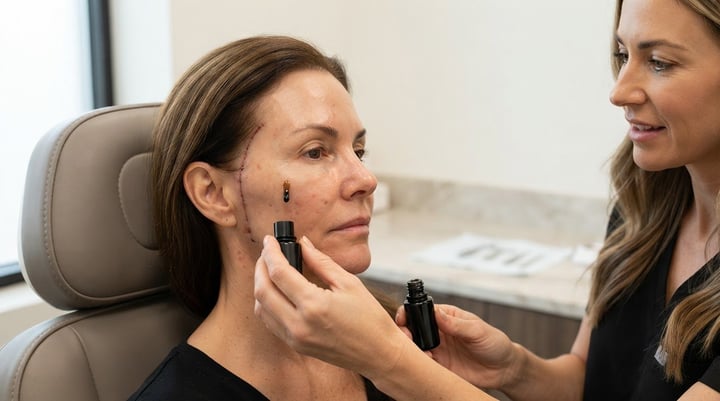

Sensitive skin doesn’t automatically rule out a HydraFacial, but the treatment should reflect how your skin responds. A hydrafacial for sensitive skin may use gentler settings and omit steps or ingredients that could irritate you. If you have an active rash, sunburn, or inflamed skin, wait until it calms. What matters is how exfoliation, extractions, and serums are adapted to your skin’s needs.
It’s understandable to be cautious if your skin reacts easily. This guide explains what makes HydraFacial distinctive, how its treatment steps work, and which ingredients may be worth discussing when you’re sensitive to skincare products. You’ll also learn how often to consider treatment, what to share about allergies or past reactions beforehand, and how to care for your skin afterward. With a clearer understanding of the process and its safety factors, you can make a more informed decision about whether it fits your skin at this time.
Key Takeaways
- A gentler treatment approach can adjust suction, exfoliation, and serums to better accommodate sensitive skin.
- Starting sessions 6-8 weeks apart may give sensitive skin time to respond before considering a different schedule.
- HydraFacial combines cleansing, exfoliation, extraction, and hydration, but individual steps can be tailored.
- Discuss allergies, previous reactions, and current skin concerns before treatment; active irritation may be a reason to postpone.
- Learn which ingredients may need extra consideration and how to care for skin after treatment.
HydraFacial for Sensitive Skin: Is It Safe in 2026?
A HydraFacial may be adapted for sensitive skin by adjusting suction, exfoliation, and serum selection. If you have eczema or active irritation, first consider whether to postpone treatment until your skin calms.
Treatment Customization for Sensitive Skin
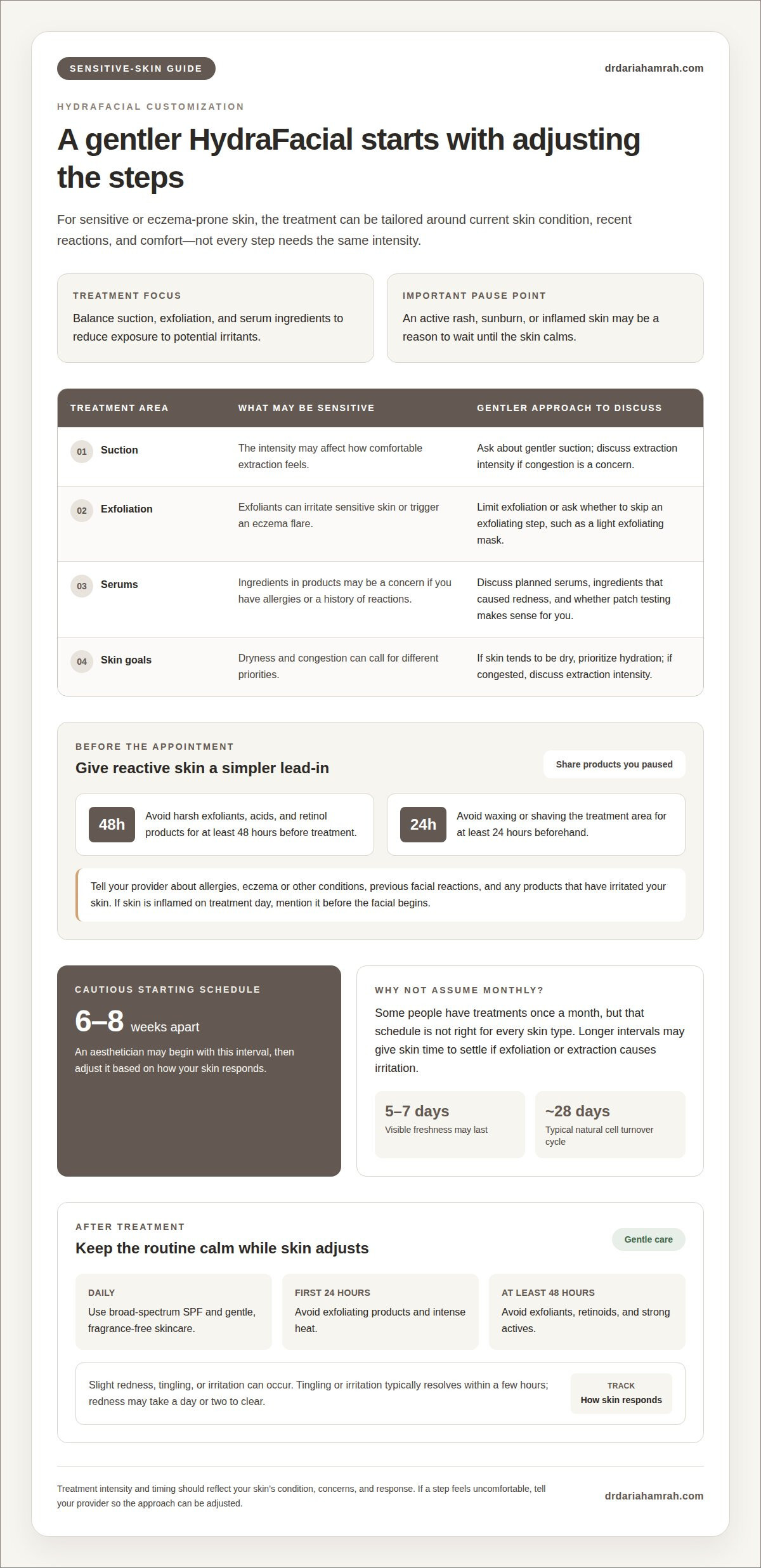
Customization means adjusting the facial’s steps and intensity to your skin’s current condition. For sensitive or eczema-prone skin, a gentler approach may reduce exposure to potential irritants while addressing concerns such as dead skin or a dull complexion.
At your first session, discuss gentler suction and whether to skip an exfoliating step, such as a light exfoliating mask. Exfoliants can irritate sensitive skin or trigger an eczema flare. Your skin’s needs matter too: if it tends to be dry, you may prioritize hydration; if you have congestion, discuss extraction intensity. The treatment plan should reflect your goals and recent skin reactions.
Patch Testing and Provider Communication
Patch testing means trying a product on a small area before broader application. Ask whether it makes sense given your sensitivities and the serums planned. Before treatment, tell your provider about allergies, eczema or other conditions, previous facial reactions, and skincare products that have irritated your skin.
Be specific: name a serum ingredient that caused redness, describe where irritation appeared, and explain whether your skin is currently inflamed. This information helps guide decisions about suction, exfoliation, and which products to avoid. In the United States, the price depends on the treatment plan and is provided after a quote request; factors include selected steps, serum choices, and customization.
Preparing Sensitive Skin
Preparation means limiting potential irritants before the appointment so your provider can assess your skin more clearly. Avoid harsh exfoliants, acids, and retinol products for at least 48 hours before treatment. Avoid waxing or shaving the treatment area for at least 24 hours beforehand.
Keep your usual skincare simple as you prepare, and mention any products you paused. If you have sunburn, a rash, or inflamed skin on treatment day, tell your provider before the facial begins. Very sensitive or irritated skin may need time to calm. Treating active inflammation can make exfoliation and suction harder to tolerate.
Customization involves more than choosing a lower setting. The balance of suction, exfoliation, and serum ingredients matters, and a gentler approach can be a sensible starting point for reactive skin. If a step feels uncomfortable, say so during the appointment so the approach can be adjusted.
Recommended treatment frequency
For sensitive skin, a cautious starting schedule is often more useful than a fixed maintenance routine. An aesthetician may begin with HydraFacial treatments 6-8 weeks apart, then adjust the interval based on how your skin responds.
Some people with sensitive skin may have a treatment once a month. Monthly appointments are also used to address the appearance of fine lines, wrinkles, hyperpigmentation, oiliness, or congestion. That schedule isn’t right for every skin type. If exfoliation or extraction irritates your skin, longer intervals may give it time to settle before another facial.
Results can last 5 to 7 days, while the skin’s natural cell turnover cycle is typically around 28 days. Those timelines describe different things: visible freshness may fade before the skin’s renewal cycle completes. A monthly appointment can align with that cycle for some goals, but sensitive skin may benefit from a slower start. Treatment frequency should reflect your response, skin concerns, and chosen treatment intensity.
What are common side effects of HydraFacial on sensitive skin, and how long do they last? Slight redness, tingling, or irritation can occur. Tingling or irritation typically resolves within a few hours, while redness may take a day or two to clear. The duration and intensity of a reaction can vary with your skin sensitivity and the steps used.
HydraFacial is commonly described as having no downtime, and people can resume regular activities, including wearing makeup, the same day. Still, visible redness may affect your plans, so allow time for your complexion to settle before an important occasion. This is especially worth considering if your skin is reactive, since responses vary.
After treatment, use broad-spectrum SPF daily and gentle, fragrance-free skincare for 24-48 hours. Avoid exfoliating products and intense heat for the first 24 hours, and avoid exfoliants, retinoids, and strong actives for at least 48 hours. These steps help keep the post-treatment routine calm while your skin adjusts.
Track how your skin feels after each appointment, including redness, irritation, and when they resolve. If a monthly schedule feels too frequent, discuss spacing treatments farther apart; if your skin remains comfortable, the interval can be reconsidered. A personalized facial treatment plan can take your skin’s response and goals into account.
Cleansing, exfoliation, extraction, and hydration
A HydraFacial combines cleansing, exfoliation, pore extraction, and hydration in one appointment. Understanding its three-step sequence shows where each part can be adjusted for comfort.
Cleansing and Exfoliation
The first stage, cleanse and peel, clears surface residue and loosens dead skin through exfoliation. This prepares the complexion for later steps without making every part of the facial equally intensive. For sensitive skin, the distinction matters: cleansing and exfoliating are separate actions, and exfoliation can be limited or adjusted to your skin’s response.
A stronger peel isn’t essential. The plan can include cleansing while reducing exfoliation or skipping an exfoliating mask. This addresses surface buildup without automatically increasing stimulation. Ingredients used at this stage matter too, particularly if you’ve reacted to exfoliating products before.
Adjusting Suction and Exfoliation
Suction is the device-assisted action used during treatment, while exfoliation loosens dead skin from the surface. Their intensity can be considered separately, allowing the treatment to prioritize comfort rather than applying the same approach at every step.
For example, sensitive skin may call for gentler suction and less exfoliation than skin with persistent congestion. The goal isn’t to remove as much as possible, but to match the treatment to your skin’s condition. If a step feels uncomfortable, say so during the facial so your provider can adjust its intensity.
Pore Extraction and Hydration
The extract and hydrate stage pairs pore cleansing with hydration. HydraFacial extraction is described as relatively gentle, including for eczema- and rosacea-prone skin, but active irritation still affects whether treatment is suitable.
Hydration follows extraction, helping replenish the skin after cleansing and exfoliation. In the final fuse and protect step, selected ingredients are applied to complete the treatment. This sequence matters because extraction isn’t the end of the appointment: hydration and protection finish the process.
The three named steps are cleanse and peel, extract and hydrate, and fuse and protect. Together, they combine cleansing, exfoliation, extraction, hydration, and antioxidant protection in one appointment. The sequence moves from surface preparation to pore care, then hydration and protection.
HydraFacial is non-invasive, but that doesn’t mean every step should be identical for every complexion. The balance of cleansing, exfoliation, suction, and extraction can change the experience. For sensitive skin, a gentler approach to exfoliation may matter more than completing every step at maximum intensity.
After treatment, your skin may look refreshed or glowing, but its appearance doesn’t show how each step felt. Note which stage caused tightness or sensitivity, such as exfoliation or pore extraction. Those observations can help shape a more considered approach at a future facial.
Gentle acids and soothing serums
Serum choice affects how a HydraFacial feels after cleansing and exfoliation. For sensitive skin, distinguish between ingredients selected for hydration and those that may cause irritation. The serum can be adjusted alongside the treatment steps rather than using the same formula for every complexion. Ingredient names matter, especially if you know a product has caused a reaction.
If your skin is highly reactive, discuss salicylic acid and glycolic acid, which are exfoliating ingredients. They may not suit some sensitivities, even in a facial designed to refresh the complexion. Mention any past response to these acids before treatment, including stinging or redness. Your history can help guide whether an exfoliating ingredient belongs in your plan.
If you have severe sensitivities, discuss peptides too. Certain peptides may be a concern, so don’t assume every serum ingredient will suit your skin simply because it’s used in a professional facial. Share known allergies and previous reactions, then discuss the specific ingredients planned for your appointment. This helps make serum selection more informed.
Hydrating serums may contain hyaluronic acid, which can hold up to 1,000 times its weight in water. That property helps explain why it’s used in skincare focused on hydration. A serum containing hyaluronic acid may complement a treatment’s hydration stage, while your sensitivity history still guides whether that formula fits your skin.
HydraFacial serums may also contain antioxidants and peptides intended to help calm irritation and hydrate skin. These ingredients have different roles, so the full combination matters. If a particular serum has caused discomfort before, name it or describe its ingredients. Consider the whole blend, not just one familiar label.
For a gentler approach, discuss soothing serums and lower-intensity settings together. A calming serum can’t cancel out irritation from an exfoliating step or an ingredient your skin doesn’t tolerate. Matching the formula to the treatment sequence matters because cleansing, exfoliation, extraction, and hydration each involve a different part of the process.
Bring a concise skincare history to your appointment. Note whether a cleanser, acid, or peptide product has caused dryness, burning, or redness. Include any known allergy to salicylic acid or serum ingredients. These details can help your provider select products and adapt the facial to your concerns.
Ingredient selection is a conversation, not a guarantee that irritation won’t occur. If you have severe sensitivities, discuss salicylic acid, glycolic acid, and certain peptides before they’re used. A carefully chosen hydrating serum may support comfort, but the right formula depends on your past reactions and the ingredients planned for the session.
HydraFacial safety for sensitive skin
Safety depends on your skin’s condition, sensitivities, and planned treatment steps, not just the label “sensitive.” A HydraFacial can be customized, but active inflammation changes the decision. Calm skin and skin with a current rash are not equivalent starting points. Share relevant health and skincare details before treatment so your provider can consider whether to proceed, adapt the steps, or postpone.
Before your appointment, explain any allergies, pre-existing conditions, previous treatment reactions, and products that have irritated your skin. Name specific ingredients, such as salicylic acid, if you know they trigger a reaction. Also mention isotretinoin use, pregnancy or breastfeeding, a recent chemical peel or laser treatment, and any active rash, sunburn, or inflamed skin. These details can affect whether a treatment or serum is appropriate.
Some skin conditions call for particular caution. Active rosacea flare-ups, severe eczema or dermatitis, open wounds, and infections may require an alternative to HydraFacial. Very sensitive skin, rosacea, irritation, sunburn, or windburn are reasons to wait until the skin calms. Treating inflamed or damaged areas can expose reactive skin to additional exfoliation and suction.
Traditional facials vary in their techniques and products, so the name alone doesn’t determine how your skin will respond. Consider the planned steps: exfoliation, extraction, and serum application each involve different ingredients or types of contact with the skin. Your skin type, current symptoms, and known sensitivities can guide those choices. A radiant appearance isn’t a substitute for assessing irritation or active inflammation first.
After treatment, slight redness, tingling, or irritation can occur. Tingling or irritation typically resolves within a few hours, while redness can take a day or two to clear. Redness that lasts longer, worsens, or comes with significant discomfort deserves medical attention. Use broad-spectrum SPF daily, and avoid exfoliants, retinoids, and strong actives for at least 48 hours after treatment.
For sensitive skin, the clearest safety takeaway is to disclose relevant conditions and postpone treatment over active irritation or damaged skin. If you’re considering a Hydra-facial, discuss your skin concerns with Dr. Daria Hamrah to explore a tailored approach.
Dr. Daria Hamrah: Hydra-facials
Dr. Daria Hamrah offers Hydra-facials for people seeking a non-surgical facial treatment tailored to their skin concerns. If sensitivity, past product reactions, or questions about exfoliation have made you cautious, discussing your skin history and treatment goals can help shape a thoughtful approach. Share known allergies, previous irritation, and any active skin concerns before treatment.
Hydra-facials may also complement a broader skincare plan that includes medical-grade skincare, when appropriate. The focus is on matching treatment choices to your complexion rather than assuming every skin type needs the same steps. If your skin is inflamed or sunburned, address that concern before proceeding with a facial.
Contact Dr. Daria Hamrah to discuss whether Hydra-facials align with your skin concerns and goals.
Make Your Next Skin Decision With Confidence
A hydrafacial for sensitive skin can be part of a broader approach to facial care. Your next step is to discuss what matters most to you, whether that’s maintaining your skin’s comfort or exploring other aesthetic goals. Dr. Daria Hamrah offers Hydra-facials alongside Botox, rhinoplasty, and the Deep Plane Facelift (Longevity Facelift), giving patients options to consider within the practice’s facial rejuvenation services.
You don’t need to settle every decision at once. Start by sharing your priorities, relevant skin concerns, and the changes you hope to explore. A thoughtful discussion can help you understand which options align with your goals and what questions to consider before moving forward.
Contact Dr. Daria Hamrah to discuss your goals and next steps. A considered choice is a strong beginning.
Frequently Asked Questions
What makes a HydraFacial so special?
A distinctive feature is the way several skincare actions are coordinated in one appointment rather than handled as separate visits. This can be useful if you want cleansing, pore care, and hydration considered together. The treatment can also be adapted: for example, a session for reactive skin may use gentler settings or omit an exfoliating step. The value lies in tailoring the process, not applying every step at maximum intensity.
Is the HydraFacial worth it?
A HydraFacial may suit you if your goal is a refreshed complexion and you value a treatment that can be adjusted for comfort. It may be less suitable if you expect it to resolve a persistent skin condition or create a lasting structural change. Consider your main goal, known sensitivities, and planned steps. Discussing these points can help you judge whether the facial aligns with your priorities.
What Makes HydraFacial Different from a Traditional Facial?
A HydraFacial follows a defined sequence that combines cleansing, exfoliation, extraction, and hydration, while traditional facials vary in their techniques and products. That distinction matters if you’re sensitive to manual extractions or particular ingredients: the method and serum choices affect the experience. Neither label alone determines what suits your skin. Compare the planned steps and products with your specific concerns, such as congestion or a history of irritation.
Who Should Avoid HydraFacial?
People with open wounds, skin infections, severe eczema or dermatitis, or an active rosacea flare may need to avoid or postpone treatment. Sunburn, windburn, active rashes, and inflamed skin are also reasons to wait until the skin settles. If you’re taking isotretinoin, pregnant or breastfeeding, or have recently had a chemical peel or laser treatment, discuss your situation with a skincare professional before scheduling.
Are There Any Side Effects to Consider?
Temporary redness, tingling, or irritation can follow treatment, especially on reactive skin. Tingling or irritation commonly settles within a few hours, while redness may take a day or two to clear. Keep your post-treatment routine simple, avoid strong actives for at least 48 hours, and use broad-spectrum SPF daily. If discomfort worsens or persists beyond the expected settling period, seek medical advice rather than adding more skincare products.
Is HydraFacial Safe for Rosacea or Acne?
Suitability depends on whether rosacea or acne is active and how your skin responds to exfoliation and extraction. An active rosacea flare, inflamed skin, or open lesions can make treatment inappropriate at that time. If you have acne-prone skin without active irritation, discuss the planned steps and ingredients, including any acid sensitivities. Your current skin condition matters more than the diagnosis name alone.
What Exactly Is a HydraFacial?
A HydraFacial is a non-invasive facial treatment that cleanses and exfoliates while delivering hydration and skincare ingredients. Its process is commonly organized into three phases: cleanse and peel, extract and hydrate, then fuse and protect. The sequence brings several skin-focused actions together in one appointment. For sensitive skin, settings and ingredients can be adapted to your history and current complexion.
What didn’t the HydraFacial do?
A HydraFacial doesn’t guarantee that skin concerns will disappear or that results will last indefinitely. It also isn’t a substitute for assessing a persistent rash, infection, or painful inflammation. For example, it may suit someone seeking a facial refresh, while someone with an active skin condition should address that concern first. Set expectations around your specific goal, and treat lasting or worsening symptoms as a separate medical issue.