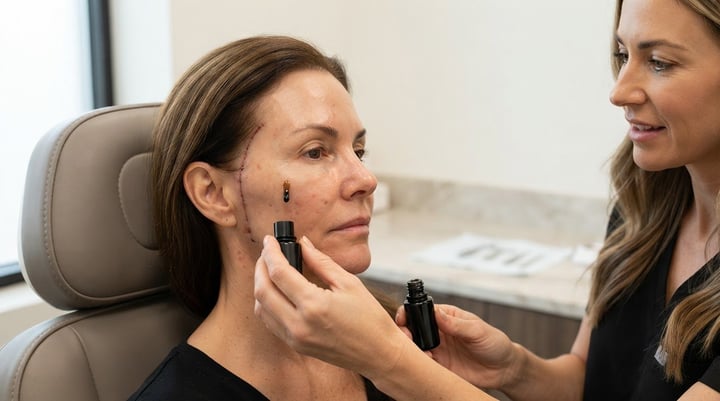

A stronger vitamin C serum isn’t automatically a better one. The medical grade vitamin C serum benefits people often seek include antioxidant support and a brighter, more even-looking skin tone, but results depend on the formula and how well your skin tolerates it. Vitamin C can complement sunscreen, not replace it.
If you’re considering L-ascorbic acid, the most widely studied topical form, you may be weighing its potential benefits against gentler vitamin C derivatives. That choice matters: an irritating formula can be difficult to use consistently, and regular use is important for seeing changes.
This guide explains the potential skin benefits of topical vitamin C, how L-ascorbic acid differs from other forms, and why concentration, stability, and packaging matter. You’ll also learn how to introduce vitamin C thoughtfully if your skin is sensitive and how to pair it with sunscreen in a balanced routine.
Key Takeaways
- Understand how topical vitamin C’s antioxidant role differs from the vitamin C your body gets through food.
- Learn why vitamin C supports collagen formation and how that relates to skin structure and healing.
- Compare L-ascorbic acid with other vitamin C forms, including why a higher concentration isn’t automatically better.
- Find a gentler way to introduce vitamin C if your skin is sensitive or reactive.
- See what formulation and packaging can reveal about a serum, and when medical-grade skincare may be a useful next step.
Vitamin C as an antioxidant
Vitamin C is an antioxidant that helps counter free radicals, unstable molecules formed through ordinary biological processes and environmental exposure, including ultraviolet (UV) light. When free radicals overwhelm the skin’s defenses, oxidative stress can contribute to visible changes such as uneven tone and texture. A topical serum applies vitamin C directly to the skin’s surface to support antioxidant protection.
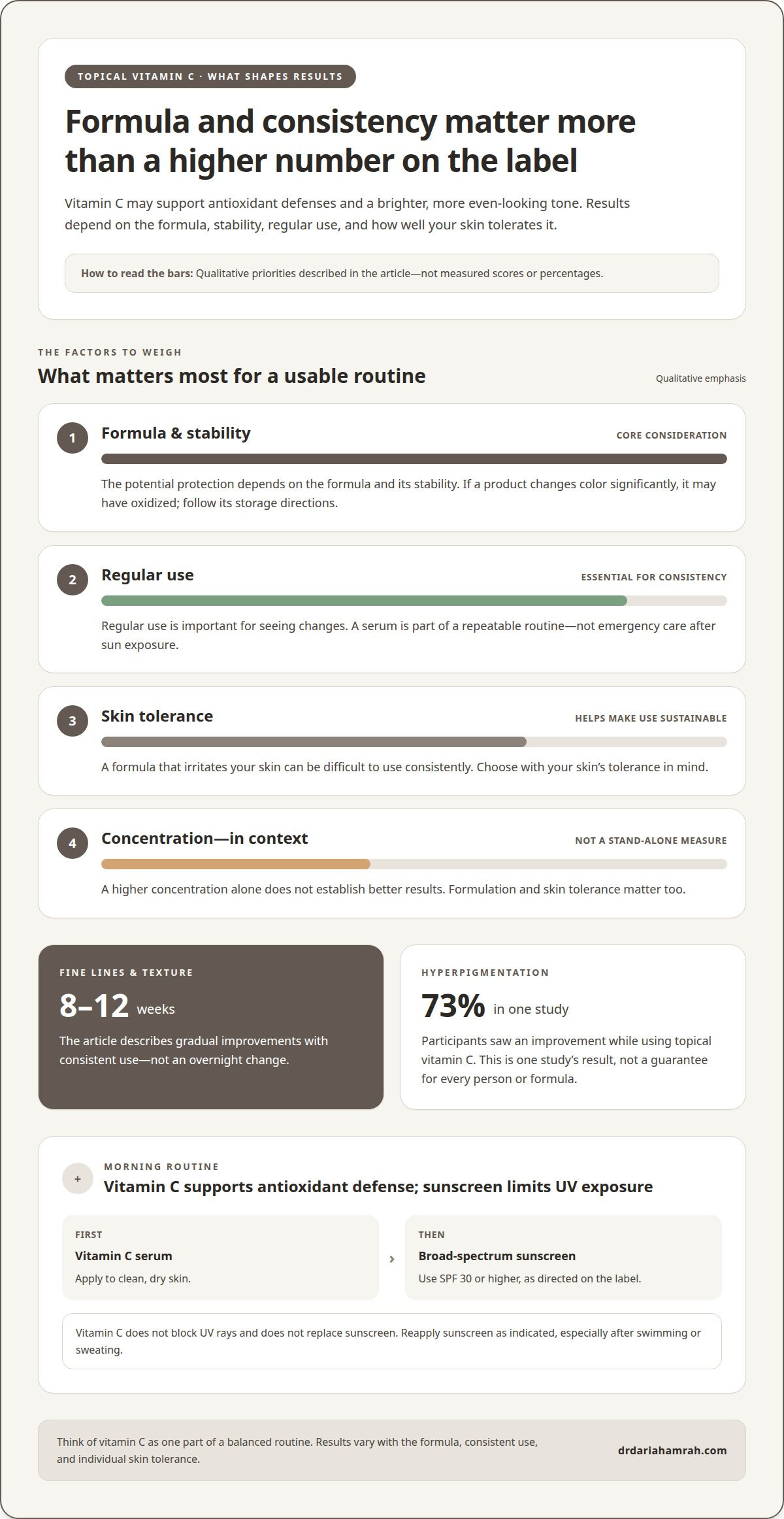
Think of antioxidants as one part of the skin’s defense system, not an invisible shield. Vitamin C can help neutralize some free radicals, but it cannot prevent every source of damage or reverse all existing changes. UV exposure and environmental stressors such as pollution are among the sources. The potential protection depends on the formula, its stability, and regular use.
Vitamin C’s relationship with UV exposure needs careful framing. Research has examined whether topical vitamin C can complement protection against sun-related oxidative stress. A serum does not block UV rays and should never replace sunscreen. Sunlight can still reach your skin even when an antioxidant is part of your routine.
For morning use, apply vitamin C serum to clean, dry skin, then follow with broad-spectrum sunscreen with SPF 30 or higher. Vitamin C and sunscreen work in complementary ways: the serum provides antioxidant support, while sunscreen helps reduce UV exposure. Use sunscreen as directed on its label, and reapply as indicated, especially after swimming or sweating. This pairing supports a more complete daily approach to sun protection.
Food is another source of vitamin C, but dietary intake and topical skincare serve different purposes. According to the National Institutes of Health, Office of Dietary Supplements, the recommended daily amount for adult men is 90 milligrams daily. According to the National Institutes of Health, Office of Dietary Supplements, the recommended daily amount for adult women is 75 milligrams daily. Those dietary recommendations are not serum instructions; applying a topical product does not replace nutrition.
Consistency matters more than treating a serum as emergency care after a sunny day. Use it as part of a repeatable morning routine alongside sunscreen, rather than relying on it after prolonged exposure. If a vitamin C product changes color significantly, it may have oxidized. Observe its appearance and follow the storage directions, as oxidation can reduce potency.
Keep expectations grounded: antioxidant support is helpful, not absolute. A serum cannot make intentional, unprotected sun exposure safe or address every cause of skin changes. If sun-related damage is your main concern, consider your routine as a whole: gentle cleansing, a stable vitamin C formula, and daily sunscreen. These steps work together.
In short, topical vitamin C helps support the skin’s antioxidant defenses against free radicals, including those associated with UV exposure. Pairing it with SPF 30 or higher sunscreen gives your routine two complementary forms of protection. The distinction is simple: vitamin C supports antioxidant defense; sunscreen remains essential for limiting UV exposure.
What are the proven benefits of topical vitamin c for skin?
Topical vitamin C has been studied for its role in collagen formation and visible changes in skin tone and texture. Potential medical grade vitamin C serum benefits include antioxidant support and a brighter-looking complexion, but results depend on the formula and consistent use.
Collagen Formation and Healing
Vitamin C supports the body’s formation of collagen, a structural protein that helps maintain skin integrity and is involved in healing. Vitamin C contributes to this biological process, but applying a serum does not instantly repair skin or replace appropriate care for a wound.
Collagen formation is just one of vitamin C’s roles in the body. Vitamin C also contributes to forming blood vessels, cartilage, muscle, and collagen in bones. These roles are part of normal body function, while a serum is applied directly to the skin. The medical grade vitamin C serum benefits you seek depend partly on this distinction between local skincare and the body’s broader needs.
Collagen Support for Signs of Aging
Collagen support describes vitamin C’s contribution to skin structure, while anti-aging claims refer to visible outcomes. Fine lines and texture changes can relate to shifts in skin structure over time. Supporting collagen formation may help address these concerns, but it does not erase them or stop natural aging. Realistic expectations matter as much as ingredient selection.
Clinical studies have evaluated combinations of L-ascorbic acid, vitamin E, and ferulic acid for changes related to fine lines, sun-damage markers, and uneven tone. Findings about a combination do not prove that every vitamin C product has the same effects. The active ingredients and formula design matter when interpreting study results.
For fine lines and texture, change is gradual. Improvements typically appear after 8 to 12 weeks of consistent use, rather than after a single application. You can assess the same areas over time in similar lighting, instead of relying on day-to-day impressions. This makes it easier to notice gradual changes without expecting an overnight transformation.
Vitamin C may also support a brighter, more even-looking tone. In one study, 73% of participants saw an improvement in hyperpigmentation while using topical vitamin C. That result reflects one study, not a guaranteed outcome for every person or formula. Dark spots can have different causes, so the concern and product both matter.
Choose a serum based on the skin concern you want to address, then use it consistently as directed. A higher concentration alone doesn’t establish better results; formulation and skin tolerance also matter. If your routine needs a more individualized approach, medical-grade skincare can be considered in relation to your skin goals.
Is l-ascorbic acid the best form of vitamin c for skin?
L-ascorbic acid is the most widely studied topical form, but it is not automatically the best fit for every routine. Apply serum to clean, dry skin, after toner if you use one. Use it in the morning and retinol at night rather than applying both together. Niacinamide and acids can also be part of a routine, but introduce products thoughtfully and separate applications if irritation develops.
L-Ascorbic Acid and Its Derivatives
L-ascorbic acid is pure vitamin C and is widely studied for its antioxidant properties. Its research record makes it a familiar option, but skin types may respond differently. Vitamin C derivatives are other forms used in topical products, and the form can influence how a serum is formulated and experienced.
Consider your routine as a whole. A concentrated L-ascorbic acid formula and a derivative-based serum are not interchangeable simply because both contain vitamin C. Neither is the same as eating an orange or taking a supplement, which provides vitamin C through food or oral intake rather than topical application. The most useful choice is one you can use consistently and comfortably.
Concentration, Potency, and Formulation pH
Concentration describes how much L-ascorbic acid a serum contains; pH influences how the formula behaves on skin. A commonly recommended concentration range is 10-20%, with a pH of 2.5 to 3.5 for absorption. These figures describe formulation considerations, not a guarantee that one percentage suits every person.
A higher concentration isn’t automatically more effective. Above 20%, irritation risk can rise without proportional benefit, while formulations below 10% may not provide the desired benefits. Acidity matters too: absorption drops sharply above approximately pH 4, while irritation risk rises below pH 2.5. Formulation and skin tolerance both help determine a sensible fit.
Choosing an L-Ascorbic Acid Serum
Choose by assessing the formula, not by chasing the largest percentage on the label. A 15-20% concentration is recommended for many skin types, but a lower concentration can be a more comfortable starting point for reactive skin. Packaging and storage matter because light, air, and heat can oxidize L-ascorbic acid and reduce its potency.
Check the product’s color over time: a serum turning brown signals oxidation. Store it away from direct sunlight and heat, close the cap after use, and follow the product’s storage directions. Some water-based L-ascorbic acid formulas are refrigerated. These steps help preserve the formula, while regular application supports meaningful skincare results.
Use about a pea-sized amount per application, then follow with sunscreen in the morning. If your routine includes retinol, keep it for nighttime rather than applying both at once. Introduce niacinamide or exfoliating acids gradually; irritation can signal that your routine needs adjusting. The best choice balances concentration, pH, stability, and your skin’s response.
Potential irritation and sensitive skin
Vitamin C can fit into different routines, but a reactive complexion may need a gentler introduction. Concentration, acidity, application frequency, and the rest of your skincare routine all affect comfort.
Skin Compatibility and Barrier Support
Skin compatibility means choosing a formula and routine your skin can tolerate consistently. For sensitive skin, begin with a lower concentration, such as 5% to 10%, and use the serum gradually. A product formulated at a high concentration may feel too intense, especially alongside other active ingredients. Pause use if you notice persistent discomfort rather than pushing through irritation.
Introduce one new product at a time so you can identify how it affects your skin. Start with three to four applications per week, then increase frequency as tolerated. If you have sensitive skin, test a small amount on your arm first and use the serum no more than every other day. Avoid adding another new active at the same time, which makes it harder to identify the cause of a reaction.
Formulation pH and Skin Penetration
Formulation pH influences how L-ascorbic acid behaves and penetrates the skin. A pH of 2.5 to 3.5 is recommended for absorption, while irritation risk rises below pH 2.5. Above approximately pH 4, absorption drops sharply. These formulation details matter because a highly concentrated serum can still be uncomfortable when its acidity doesn’t suit your skin.
Packaging and stability matter, too. Light, air, and heat can oxidize L-ascorbic acid and reduce its potency. Close the cap after use and store the serum away from direct sunlight and heat. Replace it if its color changes significantly. These steps help preserve the formula, but they do not make an irritating product suitable for sensitive skin.
Dietary vitamin C is a separate way to support skin health. A University of Otago study found that dietary vitamin C intake influenced participants’ skin vitamin C levels, skin thickness, collagen production, and epidermal cell renewal. Food and topical skincare work through different routes, so a serum is not a substitute for a balanced diet.
That distinction helps set expectations for brightening products. Topical vitamin C targets the skin where it is applied, while dietary sources contribute to the body’s overall vitamin C supply. Neither approach means a stronger serum is always the right choice for sensitive skin.
Choose a formula based on tolerance as well as concentration. A lower-strength product used consistently may be more practical than a potent formula that irritates your skin and disrupts your routine. Notice how your skin responds after each application, particularly when you combine the serum with exfoliating acids or retinol.
What distinguishes medical-grade vitamin C serums
“Medical-grade” can suggest a higher standard, but the label alone does not explain a serum’s formula, stability, or evidence. In the United States, “clinical-grade” is an unregulated marketing term with no legal definition for topical vitamin C products. The label cannot establish the medical grade vitamin C serum benefits a particular formula may offer. Instead, look at its ingredients, formulation, packaging, and place in your routine.
There is no single established price that separates medical-grade vitamin C serums from drugstore options in the United States. Cost varies with factors such as formulation, ingredient concentration, packaging, and brand. The label itself does not establish a price or prove better results.
“Pharmaceutical-grade” has a distinct meaning: pharmaceutical-grade vitamin C is tested against United States Pharmacopeia or National Formulary specifications. That is not the same claim as “medical-grade” or “clinical-grade.” Read each term carefully; one label does not mean a product was tested to another standard.
Formulation matters because L-ascorbic acid is sensitive to light, air, and heat. These factors can reduce potency, so a serum’s bottle and closure affect how well its formula is protected during use. Even a carefully designed formula can lose potency if repeatedly exposed to air or stored in direct sunlight. Stability is one practical factor when considering potential medical grade vitamin C serum benefits.
Look beyond the percentage on the package. A higher concentration does not automatically make a serum better, and a strong formula may not suit every skin type. Consider the vitamin C form, formula stability, and how it fits your routine. For L-ascorbic acid, pH matters because formulation can influence absorption and potential irritation. These details tell you more than the label alone.
Practical checks help put product claims in context:
- Read the ingredient list to identify whether the serum contains L-ascorbic acid or a vitamin C derivative.
- Review packaging and storage directions, especially for formulas sensitive to light, air, or heat.
- Watch for a significant color change, such as a serum turning brown, which can indicate oxidation.
- Use sunscreen as part of your daytime routine; a vitamin C serum isn’t a substitute for it.
These checks help distinguish concrete formulation details from broad label language. They also keep expectations grounded: “medical-grade” alone does not establish a specific concentration, stable packaging, or particular skin result. Assessing medical grade vitamin C serum benefits means considering the ingredient, formula, and storage together, rather than relying on a marketing phrase.
If you want help aligning a serum with your skin health goals, explore medical-grade skincare as part of a considered routine.
Dr. Daria Hamrah: Medical-grade Skincare
Dr. Daria Hamrah offers Medical-grade Skincare for people seeking a more considered approach to their routine. If you’re weighing a vitamin C serum’s ingredients, concentration, and suitability for sensitive skin, this can be a natural next step. The focus is on connecting skincare choices with your goals, rather than assuming one serum suits everyone.
Medical-grade skincare may also be relevant if your concerns extend beyond brightness or uneven tone and you want to discuss a broader facial rejuvenation plan. Start by considering what you hope to address and which products are already part of your routine.
For guidance on medical-grade skincare, contact Dr. Daria Hamrah.
Make Your Next Skincare Choice With Intention
The medical grade vitamin C serum benefits you’re seeking are only one part of a thoughtful approach to skin health. Consider how your skincare goals connect with your broader hopes for facial rejuvenation. Your focus may be a topical routine, or you may want to explore options that address different concerns.
Dr. Daria Hamrah offers Medical-grade Skincare, as well as Botox, Rhinoplasty, and the Deep Plane Facelift (Longevity Facelift). These are distinct options for different goals. A conversation can help clarify what you want to address and which direction fits your priorities.
If you’d like to discuss your skincare goals or facial rejuvenation options, contact Dr. Daria Hamrah for advice. A considered next step can help you move forward with clarity and confidence.
Frequently Asked Questions
How long does vitamin C take to improve pigmentation?
Visible improvement in pigmentation often takes consistent daily use for 8 to 12 weeks. Dark spots can take 12 weeks or longer to fade visibly, so assess progress over time rather than after a few applications. Use the serum as directed and keep sunscreen in your routine. Persistent or changing spots deserve a separate assessment, since a serum cannot identify what caused a mark.
Is vitamin C good for acne scars?
Vitamin C can support a more even-looking tone, so it may be relevant to flat dark marks left after acne. Those marks differ from indented or raised scars, which involve changes in skin texture. A topical serum is not a complete solution for every type of acne scarring. Identify whether the concern is discoloration or texture before choosing a skincare approach.
What Makes a Vitamin C Serum Medical-grade?
There is no single defined formula or concentration that makes a topical vitamin C serum “medical-grade.” The phrase is commonly used as a marketing label, so it does not establish a particular level of effectiveness. Assess the product itself: its vitamin C form, formulation details, stability, packaging, and storage directions. These concrete features are more informative than the label alone.
What is clinical-grade vitamin c in skincare?
“Clinical-grade” is a marketing term used for skincare, not a legally defined standard for topical vitamin C products. The phrase alone does not tell you how a formula was tested or what results it can deliver. Look for clear ingredient and storage information, then consider whether the product suits your routine. A clinical-sounding label does not replace evidence about the formula itself.
What does “medical-grade” vitamin C serum mean, and is it a regulated term?
“Medical-grade” has no specific legal definition for topical vitamin C products in the United States. By itself, it is not proof of a particular concentration, testing standard, or skin outcome. “Pharmaceutical-grade” is a separate term: vitamin C described that way is tested against United States Pharmacopeia or National Formulary specifications. Do not assume the two labels mean the same thing.
What are the evidence-based skin benefits of topical vitamin C serum?
Topical vitamin C is used for antioxidant support and studied for changes in skin tone, fine lines, and texture. It also plays a role in collagen formation. The formula matters: findings about a combination of ingredients do not automatically apply to every serum containing vitamin C. Consider the product’s full formulation and your specific concern when interpreting broad claims about skin benefits.
What vitamin C concentration is effective for face serum, and is higher better?
L-ascorbic acid serums are commonly formulated at 10% to 20%. Higher isn’t automatically better: concentrations above 20% can raise irritation risk without proportional benefit. Skin tolerance and the overall formula matter alongside the percentage. If a serum is uncomfortable, using more or choosing a stronger version isn’t a sound way to improve results. Consistency with a suitable formula is more practical.
Which forms of vitamin C are used in serums, and how do they compare?
L-ascorbic acid is pure vitamin C and a widely studied topical form. Serums also use vitamin C derivatives, which are alternative forms rather than L-ascorbic acid itself. This does not mean every product behaves alike: formulation and packaging affect stability, while skin tolerance influences how well a product fits your routine. Compare the ingredient form and product directions instead of assuming all vitamin C serums have identical properties.