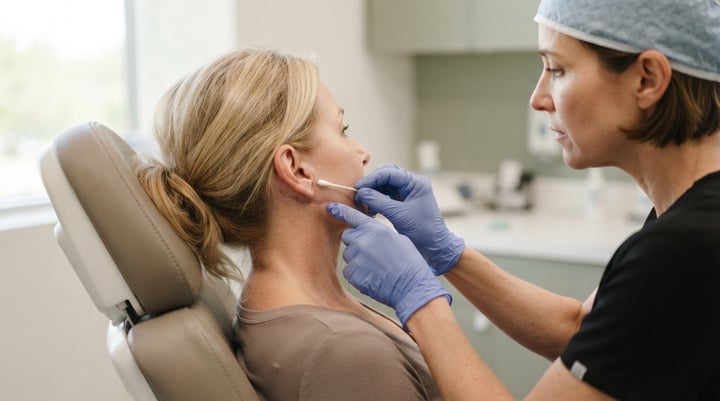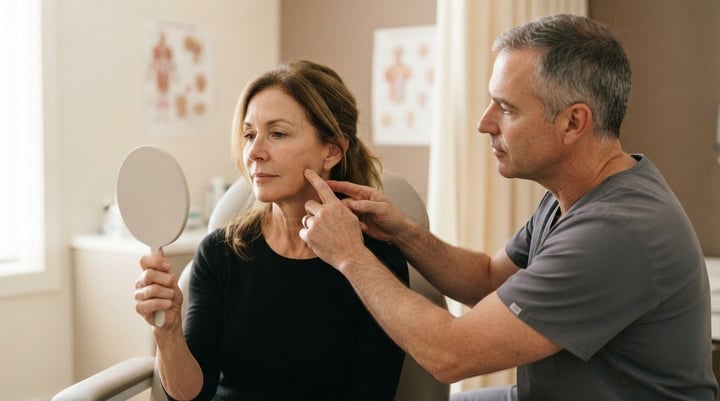

A turkey wattle may involve more than loose skin, so removing skin alone isn’t always the right approach. A neck lift for turkey wattle may be considered when loose skin, excess fat, or visible platysma muscle bands contribute to fullness or sagging. The appropriate plan depends on the cause of the change and your overall health. Wanting a clearer neck contour while still looking like yourself is understandable.
Skin laxity can develop with age, and genetics or weight changes may also contribute. Tightening the platysma can address muscle banding beneath the skin, while other surgical techniques focus on excess skin or fat. Each approach targets a different part of the concern.
This article explains what can cause a turkey wattle and what factors help determine whether a neck lift may be appropriate. You’ll learn how muscle tightening works and what recovery can involve, including bruising, swelling, tightness, and temporary numbness. The goal is to clarify the procedure and the considerations that shape a thoughtful treatment plan.
Key Takeaways
- Understand how aging, genetics, and weight changes can contribute to loose skin or fullness beneath the chin.
- Learn which neck changes may be addressed by skin tightening, fat removal, or muscle tightening.
- See how platysma tightening can help improve the appearance of vertical neck bands.
- Know what bruising, swelling, tightness, and temporary numbness may mean during recovery.
- Explore the factors a surgeon considers when shaping a treatment plan around your neck and jawline.
Who Is a Good Candidate for a Neck Lift?
A neck lift may suit someone whose main concerns are loose neck skin, visible muscle bands, or a softened jawline. For example, excess skin after weight loss calls for a different approach from a small pocket of fat beneath the chin.
Candidacy depends on the source of the concern, your general health, and your expectations. The distinction matters because skin, fat, and muscle affect the neck’s appearance in different ways.
Suitability for Loose Skin and Jowls
Loose skin is lax, excess tissue along the neck; jowls are sagging areas near the lower cheeks and jawline. Both can blur the transition between the chin and neck.
A neck lift may be considered when these changes are prominent and you want a more defined contour. A consultation assesses skin laxity, fat accumulation, overall health, and expectations to determine whether surgery can address your concerns.
Removing Excess Neck Skin and Fat
Neck lift surgery can remove excess skin and fat when these tissues contribute to fullness or sagging. The approach depends on where the excess tissue sits and whether loose skin remains after fat is addressed.
For example, a small amount of fat beneath the chin may call for a different plan than loose skin extending along the jawline. Removing fat alone won’t correct substantial skin laxity, so treatment planning considers both tissues.
Effects on Neck Skin, Bands, and Contour
A neck lift can tighten loose skin, address platysma muscle bands, and improve the jawline’s contour. It can refine the neck’s appearance, but it doesn’t change its fundamental features.
A facelift addresses changes in the lower face and may be combined with neck surgery when concerns extend from the cheeks to the neck. Nonsurgical options, including Ultherapy, are different from surgery: they don’t remove excess skin or surgically tighten neck muscles.
Neck lift results change over time as aging and weight changes affect the tissues. There’s no single duration that applies to everyone.
When choosing a qualified, board-certified surgeon, confirm the surgeon’s relevant board certification and ask how the plan addresses your skin, fat, and muscle concerns. Review the proposed procedure, recovery expectations, and follow-up care before making a decision.
In the United States, the price depends on the case and is given after a quote request; planned techniques, anesthesia, and facility costs can affect it. Insurance coverage is plan-specific, so the policy and the reason for surgery determine whether benefits apply.
Causes of turkey wattle
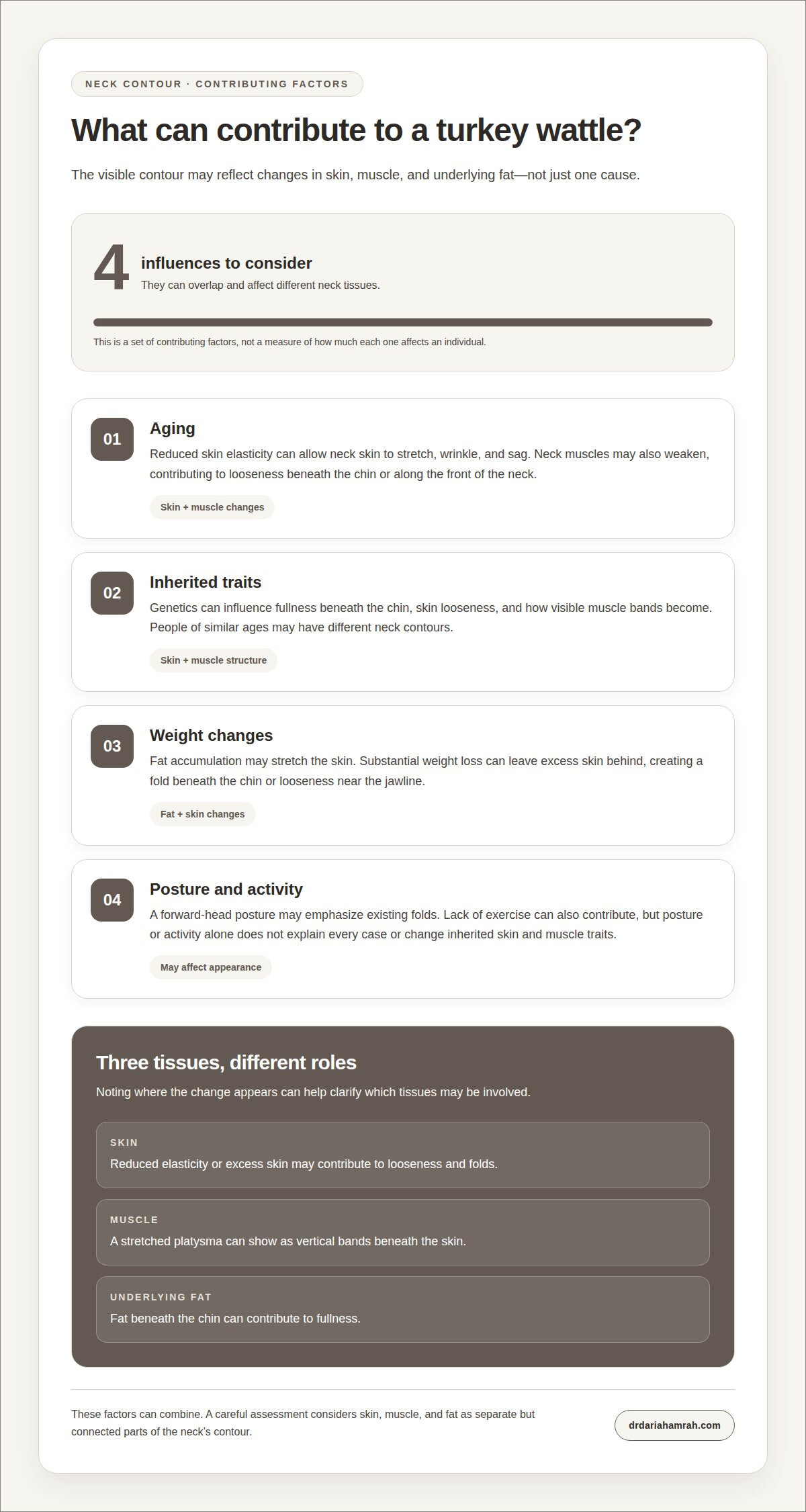
A turkey wattle can develop as the neck’s skin, muscles, or underlying fat change over time. Aging, inherited traits, weight changes, and posture can all contribute, so the visible contour may reflect several factors rather than a single cause.
Age-related changes affect both skin and muscle. Neck skin is more delicate than facial skin, and reduced elasticity can make it stretch, wrinkle, and sag. Neck muscles can also weaken with age, contributing to a looser appearance beneath the chin or along the front of the neck.
Genetics can influence how the neck looks with age. Inherited traits may contribute to fullness beneath the chin, looser skin, or more visible muscle bands. Two people of similar ages, for example, may have different neck contours because their tissue characteristics and family traits differ.
Weight changes can also alter the neck’s shape. Fat accumulation may stretch the skin, while substantial weight loss can leave excess skin behind. This can create a fold beneath the chin or looseness near the jawline. The visible change depends on the tissues involved, not simply on the number shown on a scale.
Vertical bands have a different source from surface wrinkles. The platysma is a broad neck muscle; with age, it can stretch and become more visible as vertical bands. When muscle changes occur alongside looser skin, the two features can combine, making the front of the neck appear less smooth.
Posture and activity can affect the appearance of turkey neck. A forward-head posture, for example, changes how the neck is held and may emphasize existing folds. Lack of exercise can also contribute, but neither posture nor activity alone explains every case or changes inherited skin and muscle traits.
Looking at the neck alongside the facial features helps clarify the pattern. Someone may have fullness beneath the chin, loose skin along the jawline, or bands down the neck, and each points to different tissues. Noting where the change appears and whether it followed weight loss or developed gradually can help identify contributing factors.
These causes can overlap. Aging may reduce elasticity while inherited traits influence skin and muscle structure; weight loss may then make looseness more noticeable. Identifying the combination matters because a treatment aimed at one feature may not address the others. A careful assessment considers skin, muscle, and fat as separate but connected parts of the neck’s contour.
Platysma muscle tightening
The platysma is a broad muscle that runs through the front of the neck. As it stretches with age, its edges may show as vertical bands beneath the skin. Platysmaplasty, a type of neck lift surgery, adjusts this muscle to improve visible banding and the contour beneath the chin. It addresses a deeper structural feature, not simply a surface wrinkle.
A surgeon may consider platysma tightening when muscle bands contribute to a turkey wattle. For example, someone may notice prominent vertical lines even when excess fat isn’t the main concern. Tightening the muscle can target those bands and support a smoother-looking neck contour. The treatment plan still depends on the tissues causing the visible change.
One approach is corset platysmaplasty, which tightens the platysma as part of a neck lift. The term describes a muscle-tightening technique, not a nonsurgical treatment. It may be considered when loosened muscle contributes to banding or a hanging appearance. Skin laxity and fat accumulation are distinct concerns, so muscle work alone may not address every source of fullness.
That distinction shapes the surgical plan. If stretched platysma causes visible bands, adjusting the muscle addresses their underlying structure. If loose skin or excess fat also affects the neck, the approach may include other techniques. For instance, someone with both bands and sagging skin has concerns involving more than muscle alone. The assessment considers how these features combine.
Platysmaplasty is more invasive and lengthy than less extensive approaches, and recovery is likely to take longer. This is important when weighing the potential benefit of addressing muscle banding against the recovery involved. Recovery expectations depend on the procedure, and the extent of muscle work is one factor to discuss during surgical planning.
Muscle tightening can refine the neck’s appearance, but it doesn’t change the neck’s fundamental features or stop aging. A realistic goal is to address the visible effects of stretched platysma, such as vertical bands, while keeping the treatment plan aligned with your anatomy. The surgeon evaluates muscle, skin, and fat together to determine whether platysmaplasty suits your concern.
During a consultation, describing where bands appear and how they affect your neck’s contour can focus the discussion. The surgeon can explain whether muscle tightening is relevant, whether other tissues also contribute, and how the planned procedure may affect recovery. Assessing each tissue helps distinguish a muscle concern from looseness or fullness that calls for a different approach.
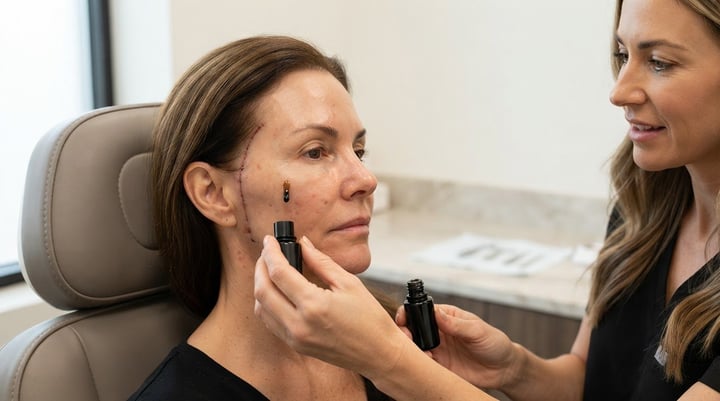
Post-surgical bruising, tightness, and numbness
Bruising and swelling are possible after neck lift surgery. Bruising is expected to disappear in a matter of days, while tightness and numbness may take a few months to resolve. These sensations have different timelines, so improvement in one symptom doesn’t mean recovery is complete.
Bruising can temporarily change the treated area’s appearance. For example, visible discoloration may remain for days even as other aspects of healing progress. Swelling is also possible after surgery, but it doesn’t have the same stated timeline as bruising. Expect changes to unfold rather than judging the neck’s final appearance in the earliest days of recovery.
Tightness is another possible part of healing. The neck may feel restricted as the skin and underlying tissues recover, while numbness can alter sensation in the treated area. Both may resolve over a few months. Their persistence during that period doesn’t, by itself, indicate what the final contour will look like.
Returning to normal after a neck lift can take a few months. This broader period helps explain why early bruising and swelling aren’t the whole recovery process. For instance, bruising may fade in a matter of days while tightness or numbness continues longer. Symptoms can improve on different schedules.
Follow-up is part of recovery. Patients are advised to see their doctor a few weeks after a neck lift so healing can be reviewed. This visit is also an opportunity to discuss symptoms such as lingering numbness or tightness and understand how they fit into the overall recovery.
Keep the timeframes distinct: bruising is expected to disappear in a matter of days; tightness and numbness may resolve over a few months; and returning to normal after a neck lift can take a few months. These describe different aspects of healing, not a single deadline. The planned doctor follow-up a few weeks after surgery is an opportunity to discuss how recovery is progressing.
Planning for a longer recovery can help set realistic expectations. Bruising or swelling in the early days is temporary, while changes in sensation can last beyond visible discoloration. Since recovery may extend over a few months, allow time for healing instead of judging the outcome in the first days. Keep the scheduled follow-up a few weeks after surgery as part of that process.
Neck lift as a treatment for turkey wattle
A neck lift treats turkey wattle by addressing the tissues that create fullness, sagging, or bands. Also called a lower rhytidectomy, it’s surgery to remove unwanted fat and skin from the jawline and neck. Depending on whether fat, muscle, loose skin, or several features contribute, the approach may combine liposuction, platysmaplasty, and cervicoplasty.
Each technique targets different tissue. Submental liposuction removes fat beneath the chin, while platysmaplasty tightens the platysma muscle. Cervicoplasty addresses loose, sagging skin along the jawline and neck. For example, a person with visible bands and excess skin may need a plan that considers both structures rather than treating fullness as fat alone.
Incision placement depends on the work required. To address excess skin or muscle, incisions may be placed behind or below the ears; a small incision may also be made beneath the chin. These access points allow the surgeon to work on the relevant tissues while planning for the neck’s contour. The procedure doesn’t change the neck’s fundamental features.
Fat beneath the chin can be a central part of the concern. When only a small amount of excess fat is present, liposuction may be sufficient. If loose skin or muscle bands also contribute, liposuction alone won’t address those structures. Treatment planning therefore distinguishes isolated fullness from combined changes in skin, muscle, and fat.
A neck lift may also be combined with a facelift when concerns involve both the neck and lower face. This may be relevant when jowls and neck laxity appear together, since the jawline visually connects these areas. A surgical plan considers how the two regions relate instead of assuming every turkey wattle requires the same procedures.
Anesthesia options described for neck lift surgery include local anesthesia with mild sedation, deeper twilight sedation, or traditional deep general anesthesia. The selected approach depends on the planned procedure and the patient’s needs. If the surgical plan includes muscle tightening or skin removal, those details also shape the operation and recovery.
After a neck lift, bruising and swelling are possible, and tightness or numbness may take a few months to resolve. Returning to normal can take a few months. A follow-up a few weeks after surgery helps review healing. Other signs of aging may also become more noticeable as the neck contour changes, so expectations should account for the face and neck together.
The clearest takeaway is to match the technique to the tissue causing the wattle: fat, muscle, loose skin, or a combination. A professional assessment can connect those findings to a surgical plan and recovery expectations. To discuss neck lift treatment, take the next step with a focused evaluation of your neck concerns.
Dr. Daria Hamrah: Necklift
Dr. Daria Hamrah performs Necklift surgery for patients seeking to address turkey wattle concerns. An evaluation considers whether loose skin, excess fat, muscle bands, or a combination shapes the neck’s appearance, then connects those findings to a suitable treatment plan.
If changes also affect the lower face, the Deep Plane Facelift (Longevity Facelift) may be relevant to the discussion. Understanding how the neck and face relate can help clarify whether treatment should focus on the neck alone or address both areas. The next step is a personal discussion of your goals, anatomy, and recovery considerations with Dr. Hamrah.
Contact Dr. Daria Hamrah to discuss whether Necklift surgery aligns with your concerns.
Take the Next Step With Clarity
A neck lift for turkey wattle is a personal decision shaped by your goals, not simply by a desire to change one feature. A focused conversation can help you explain what you’d like to address and understand how a treatment plan relates to your broader facial balance.
Dr. Daria Hamrah also offers the Deep Plane Facelift (Longevity Facelift), rhinoplasty, and Botox. These options address different facial concerns, so discussing your priorities can help clarify which treatment, if any, fits your goals. Whether surgery is right for you depends on your anatomy, health, and expectations.
Consider what a natural, satisfying outcome means to you and what questions would help you feel informed. You can contact Dr. Daria Hamrah to discuss your concerns and explore a thoughtful next step. Move forward at a pace that feels right for you.
Frequently Asked Questions
What Is A Turkey Neck?
A turkey neck describes loose or sagging skin beneath the chin and along the neck, sometimes accompanied by vertical muscle bands or fullness. One person, for example, may notice a soft fold under the chin, while another sees bands running down the neck. These appearances can have different tissue causes, so the phrase describes a visible concern rather than one specific anatomical change.
How Is The Treatment Carried Out?
Treatment is planned around the tissues contributing to the wattle. Neck lift surgery may combine liposuction for fat beneath the chin, platysmaplasty for muscle banding, and cervicoplasty for loose skin. Depending on the work, incisions may be placed behind or below the ears, with a small incision sometimes made beneath the chin. The planned work determines which techniques are used, rather than applying every method to everyone.
What To Expect?
Expect a plan based on your neck’s skin, fat, and muscle, followed by a recovery period that unfolds gradually. Bruising and swelling can affect the early appearance, while tightness or numbness may last longer. For example, visible discoloration may fade before normal sensation returns. A follow-up appointment a few weeks after surgery provides an opportunity to review healing and discuss your progress.
What is a neck lift for turkey wattle and how does it work?
A neck lift for turkey wattle is surgery intended to improve neck fullness and sagging by treating the tissues involved. The surgeon may remove excess skin or fat, tighten the platysma muscle, or combine techniques. For example, liposuction can target fat beneath the chin, while muscle tightening addresses visible bands. The procedure refines the neck’s contour but doesn’t change its fundamental features.
Who is a good candidate for neck lift surgery for loose neck skin?
A potential candidate has concerns such as loose neck skin, muscle bands, or excess fat and is in general health suitable for surgery. The assessment also considers expectations and whether the concern is limited to the neck or involves the jawline and lower face. For example, isolated fullness beneath the chin differs from loose skin extending along the jaw. These distinctions help shape an appropriate plan.
What happens during neck lift surgery, and what anesthesia is used?
The procedure may address skin, fat, muscle, or a combination, using incisions placed according to the planned work. Neck lift anesthesia options include local anesthesia with mild sedation, deeper twilight sedation, or traditional deep general anesthesia. A wattlectomy takes approximately one hour, and patients can go home the same day after the procedure. These details describe a wattlectomy and shouldn’t be assumed for every neck lift.
How long is neck lift recovery and when are results visible?
Returning to normal after surgery can take a few months. Bruising is expected to disappear in a matter of days, while tightness and numbness may resolve over a few months. Swelling can affect how the neck looks as it heals, so its early appearance may not reflect the settled contour. A doctor follow-up a few weeks after surgery helps review healing progress.
What are the risks and complications of neck lift surgery?
Bruising and swelling are possible after a neck lift, and tightness or numbness may continue during recovery. These effects have different timelines: bruising is expected to fade in a matter of days, while tightness and numbness may take a few months to resolve. The specific procedure determines which tissues are treated, so discussion of risks should address the planned techniques and your individual health.