A compelling peptide label doesn’t guarantee meaningful skin change. Peptides for skin rejuvenation may signal the skin to support collagen, repair, or hydration, but their effects depend on the formula and how it’s used. They’re one part of a broader approach to skin health, not a shortcut to a specific result.
It makes sense to look for ingredients that support the skin’s natural structure and resilience. But topical products, supplements, and injectables aren’t interchangeable. GHK-Cu, for example, is a copper peptide associated with skin repair. Understanding these differences can help you weigh potential benefits against limitations.
This guide explains what peptides may do for skin and hair, how GHK-Cu differs from other peptides, and how the main ways of using peptides compare. It also covers why formulation matters and where peptides fit alongside other skin-care and rejuvenation options.
Key Takeaways
- Understand how peptides may support collagen, elastin, and skin firmness, and why they’re not a guaranteed shortcut to rejuvenation.
- Learn what sets GHK-Cu apart as a copper peptide and why its possible uses for skin and hair deserve a closer look.
- Compare topical products, supplements, and injectables by how they’re used and what role each may play.
- See why peptide results can vary with the formula, delivery method, and your broader skin-care approach.
- Recognize when a tailored skin-care plan or another rejuvenation treatment may better match your goals.
Peptides for Skin Care: Are They Worth It?
Peptides can act as cellular messengers, encouraging skin processes linked to collagen, repair, and hydration. Their appeal for skin rejuvenation lies in supporting these processes, not in promising one specific result.
Peptide Signaling and Collagen Production
Signal peptides are short chains of amino acids that prompt skin cells to make proteins such as collagen and elastin. Think of them as messages, not replacement building material: they encourage cells to support the skin’s structural framework.
That distinction matters if you’re considering peptide therapy for firmness. A signal can support a biological process, but it isn’t the same as adding collagen directly. In topical skincare, Matrixyl 3000 is a named peptide combination associated with collagen signaling. The formula still determines how that ingredient is delivered and used.
Effects on Collagen, Elastin, and Firmness
Collagen gives skin structure and firmness, while elastin helps it return to shape. Production of both naturally slows with age. Multifunctional peptides are used to support several skin processes, including protein production and repair.
Some peptides are described as collagen-stimulating. Enzyme-inhibitor peptides take a different approach by blocking enzymes that break down collagen and elastin. These mechanisms may support skin strength and flexibility over time. Not every peptide product is interchangeable: both the peptide type and the complete formula matter when considering changes in firmness.
Clinical Evidence for Skin Rejuvenation
Studies have examined topical palmitoyl pentapeptide-3, palmitoyl oligopeptide, and palmitoyl tetrapeptide-7 formulations. One double-blind, placebo-controlled study evaluated palmitoyl pentapeptide-3 over 12 weeks. Another study tested a formula containing palmitoyl tetrapeptide-7 and another active ingredient on 60 healthy volunteers aged 45-80 for 12 months.
Reported findings include improvements in dermal density, wrinkle depth, or firmness with consistent use. These results suggest potential benefits under the conditions studied, not identical effects from every product. Studies also involve different peptides, formulas, and durations, so they don’t establish one universally effective skincare routine.
Product Use and Specific Skin Concerns
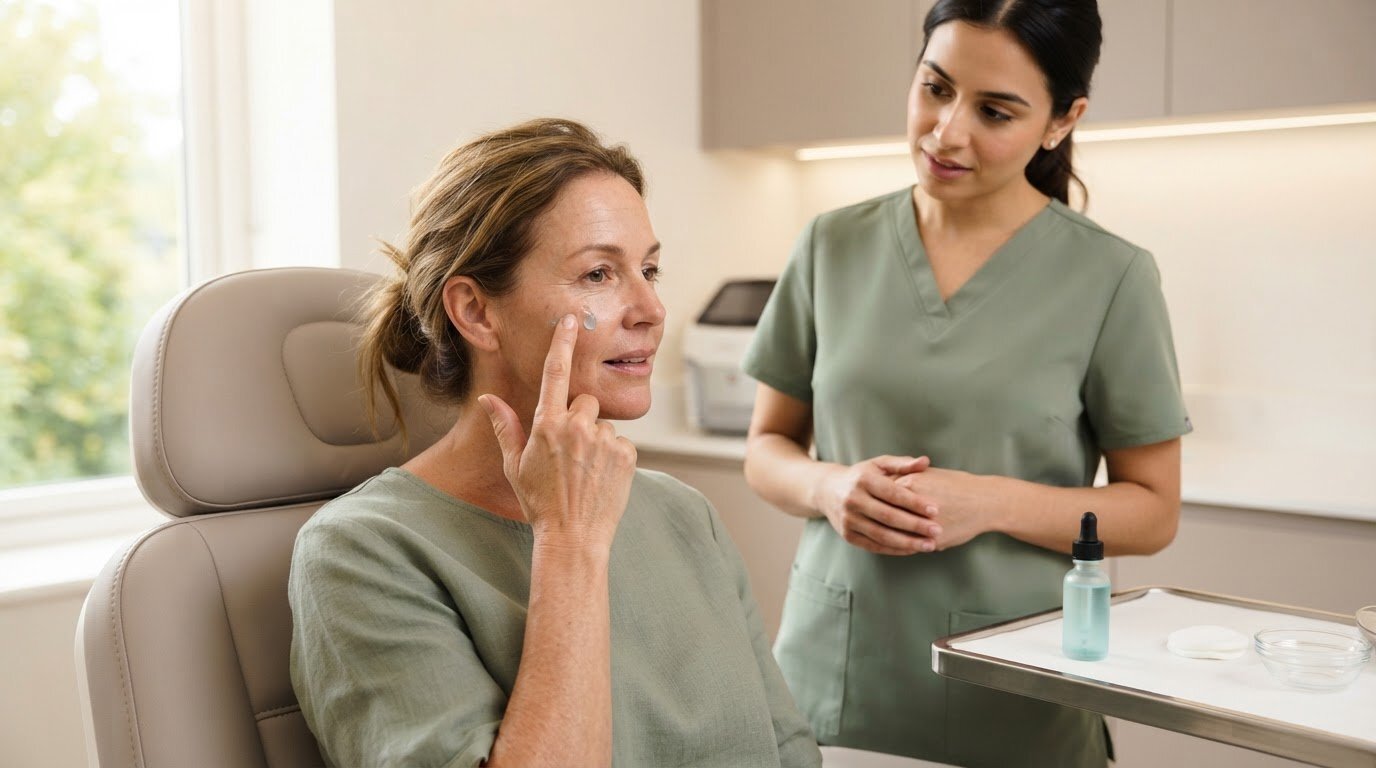
For peptides for skin rejuvenation, apply a topical product after cleansing and before moisturizer. Peptides can be used with ingredients such as hyaluronic acid, antioxidants, and ceramides. Retinoids may also be part of a skincare routine, but the formula and directions determine a sensible layering approach.
Avoid mixing peptide products directly with highly acidic ingredients such as L-ascorbic acid, which can destabilize peptides. For acne scars, sun damage, or under-eye wrinkles, don’t assume a peptide will target the concern directly. Evidence relates broadly to skin repair, collagen, and wrinkle measures; it doesn’t establish a specific outcome for each concern. A product studied for firmness, for example, may not address acne-scar texture.
GHK-Cu copper peptide for skin and hair
GHK-Cu is a copper peptide studied for its potential role in skin repair. Its name identifies a peptide linked with copper, while “carrier peptide” describes peptides that transport minerals such as copper to skin cells. This delivery role distinguishes GHK-Cu from the signal peptides discussed earlier. It supports skin nourishment and repair through a different route, rather than simply encouraging collagen production.
How Copper Peptides Work
Copper peptides are associated with skin repair, reduced inflammation, and enhanced resilience. GHK peptides have been reported to influence over 4,000 human genes involved in tissue repair and anti-inflammatory processes. That broad cellular activity helps explain the interest in GHK-Cu, but a gene-related mechanism isn’t the same as a guaranteed visible result. The practical question is how the peptide is formulated and delivered.
GHK-Cu is used in topical serums, microneedling solutions, and post-laser protocols. These are distinct applications, not interchangeable ways to use one product. A topical serum is part of a skincare routine; a microneedling solution or post-laser protocol belongs in a treatment context. Because the delivery method changes how the ingredient is used, a result associated with one format shouldn’t automatically be assumed for another.
What the Evidence Suggests for Skin and Hair
A clinical trial described for GHK-Cu reported improvements in skin thickness and fine lines over 12 weeks. This gives the ingredient a specific skin-related evidence point, but it doesn’t establish that every formula produces the same outcome. The study’s timeframe also helps set expectations: evidence about a 12-week assessment is not evidence of an immediate change.
For hair, keep the distinction clear. Findings about GHK-Cu and skin repair don’t by themselves demonstrate hair growth or changes in hair function. Although copper peptides appear in products and treatment discussions involving skin and hair, claims about hair need to be considered separately from measured skin outcomes. A serum marketed for both areas, for example, shouldn’t be assumed to have identical effects on each.
Reports also describe visible anti-aging, structural-repair, and metabolic changes over 3-6 months. Those broad descriptions don’t identify a specific hair result or guarantee a wrinkle change for an individual. GHK-Cu may be a relevant ingredient to discuss when skin repair is the goal, but its value depends on the concern, delivery format, and product as a whole. For a wider view of how ingredients fit into a thoughtful skin-health plan, explore a comprehensive approach to skin health.
What Exactly Are Anti-Aging Peptides?
Peptides are short chains of amino acids that can act as biological signals. For skin, the key distinction is how a peptide is delivered and which process it is intended to influence.
Injectable and Transdermal Therapies
Injectable and transdermal therapies deliver peptides through different routes, affecting where and how they’re used. A topical peptide is applied to the skin, while an injectable peptide enters the body by injection. These approaches aren’t interchangeable: a topical formula’s intended action may differ from that of a therapy designed to affect broader biological processes.
Peptides commonly contain 2-50 amino acids. Their size and formulation matter when considering delivery through skin. The 500 Dalton Rule describes a molecular-weight threshold for skin absorption, but it doesn’t mean every peptide product can reach the same depth or produce the same effect. A topical product’s formulation is part of its function, not a minor detail.
Examples of injectable peptides discussed for broader body processes include CJC-1295 with ipamorelin, BPC-157, and thymosin beta-4. These are not simply stronger versions of topical skincare ingredients. CJC-1295 and ipamorelin are described as stimulating the body’s natural release of growth hormone; BPC-157 is associated with inflammation; thymosin beta-4 with new blood vessel formation. Those proposed actions don’t establish a specific cosmetic outcome.
Peptide Injections and Skin Regeneration
Peptide injections are intended to influence biological signaling, while skin regeneration involves processes such as repair and collagen production. Some discussions connect BPC-157 with reducing chronic inflammation, which can contribute to tissue damage. Thymosin beta-4 is associated with angiogenesis, the formation of new blood vessels. Neither mechanism alone proves that injections rejuvenate facial skin.
That distinction matters: a proposed mechanism isn’t the same as a demonstrated improvement in wrinkles, firmness, or skin texture. Evidence for one peptide or use cannot automatically be applied to another. Injectable peptide therapy also differs from topical skincare in delivery and potential effects, so evaluate claims for the specific substance and intended use.
Medical guidance is especially important for injectable use. Peptide therapy may be unsuitable during pregnancy or breastfeeding, or for people with active cancer. A cautious approach includes consultation, informed consent, and follow-up with a licensed medical provider; compounded peptides should come from regulated pharmacies. This helps distinguish supervised therapy from self-directed injections. The decision should account for the peptide, delivery route, health context, and whether the goal is skin repair or another biological effect.

Peptides vs Supplements vs Injectables: What’s the Difference?
Route and purpose shape the comparison: a serum is applied to the skin, a supplement is taken orally, and an injectable is delivered by injection. These options aren’t interchangeable, especially when comparing gradual skincare support with visible changes from aesthetic treatments.
Peptides Compared with Botox and Fillers
Some topical neurotransmitter-inhibitor peptides, including acetyl hexapeptide-8 and pentapeptide-18, inhibit neurotransmitter release and are described as producing a Botox-like effect. That resemblance describes a proposed mechanism, not equivalence to Botox. A serum and an injectable neurotoxin differ in delivery, so a peptide product shouldn’t be treated as a substitute for an injectable treatment.
Dermal fillers and neurotoxins address visible signs through different treatment approaches. Injectable fillers and neurotoxins are temporary treatments. By contrast, peptide skincare is used as a topical product, with results associated with consistent use rather than the placement of a filler. The distinction matters if your goal is to address fine lines, volume, or skin quality.
Think about the purpose of each option. Peptides support skin processes, while fillers and neurotoxins are injectable aesthetic treatments. A wrinkle caused by expression, for example, differs from a concern about overall skin texture. Match the treatment category to the concern rather than relying on the shared label “anti-aging.”
Peptide Serums and Other Skincare Actives
Peptide serums, retinoids, vitamin C, and growth-factor products are skincare options, but they don’t contain identical ingredients. Retinoids are described as an effective alternative for aging skin, while peptide products are used to support skin processes. Growth factors are another product category; the name alone doesn’t establish that a formula works like a peptide serum.
Vitamin C requires particular attention to formulation. L-ascorbic acid is highly acidic and can destabilize peptides when combined directly. Peptides can be used with hyaluronic acid, antioxidants, and ceramides, while product directions help guide how active ingredients fit into a routine. For example, using an acidic vitamin C formula alongside peptides may mean applying them separately rather than mixing them.
Supplements and serums differ by route: a capsule is swallowed, while a serum is applied to the skin. Those routes don’t establish equal effects on collagen, tissue, or healing. A supplement label mentioning peptides doesn’t show that its ingredients reach facial skin in the same way as a topical product. Compare intended use and formulation, not just the word “peptide.”
Choose based on the concern and format. For topical skincare, consider how the ingredients work together; for Botox or fillers, consider the specific visible change being addressed. Peptides work through signaling, while fillers and neurotoxins belong to injectable treatment categories. That distinction helps set realistic expectations for fine lines and overall skin quality.
Variation in peptide products and treatment results
Peptide products differ in ingredients, format, and formulation, so their results aren’t interchangeable. Understanding those differences helps you weigh product claims against the evidence and your skincare goals.
Types of Peptide Skincare Products
Topical peptide skincare includes serums and other leave-on formulas, with ingredients such as GHK-Cu or Matrixyl 3000. Some formulas combine several peptides, while others focus on one type. The format and ingredient blend shape how the product fits into a routine, but a longer ingredient list alone doesn’t establish stronger performance.
In the United States, product costs vary with the specific formula, format, and packaging. There isn’t one meaningful price for every peptide serum or leave-on product. Comparing products by their named peptides and intended use gives cost more context than treating all peptide skincare as one category.
Evaluating Ingredients, Concentrations, and Claims
Evaluate a peptide product by identifying its named peptides, the rest of its ingredients, and any disclosed concentration. For example, a formula naming GHK-Cu differs from one listing Matrixyl 3000. If a concentration isn’t shown, a prominent peptide claim doesn’t reveal how much the formula contains or how it performs.
Compare each product’s specific claims with the evidence for that ingredient and format. Findings for one peptide or clinical formulation don’t automatically apply to every serum using a similar name. This distinction matters when a product claims to stimulate collagen or improve facial firmness.
Formulation can change the role of the same peptide. A leave-on serum keeps the ingredient in contact with skin, while an injectable treatment uses a different delivery route. GHK-Cu’s use in topical serums, microneedling solutions, and post-laser protocols illustrates why format matters. Don’t automatically transfer evidence about one application to another.
Expectations also depend on consistent use and the outcome being assessed. Topical peptide results may become visible within 4-8 weeks, while the complete formula influences effectiveness. A claim about smoother-looking wrinkles, for example, is not the same as evidence for every concern or every product containing peptides.
Packaging and routine placement add practical context. Opaque, airtight packaging can help preserve the potency of leave-on peptide formulas. Apply a peptide product after cleansing and before moisturizer; avoid combining it directly with highly acidic L-ascorbic acid, which can destabilize peptides. These details help distinguish a considered formula from a label focused mainly on broad promises.
For facial concerns that call for a broader skin-care plan, explore medical-grade skincare options alongside ingredient-focused choices. A peptide’s name is only one part of the decision; its formula, delivery, and intended outcome all matter.
Dr. Daria Hamrah: Medical-grade Skincare
Dr. Daria Hamrah offers medical-grade skincare for people seeking a considered approach to skin health. If you’re weighing peptide products, personalized skincare can place ingredients in the context of your concerns and broader rejuvenation goals. For concerns that call for more than topical care, laser skin treatments may also be an option. A Deep Plane Facelift (Longevity Facelift) addresses facial aging through a surgical approach designed for natural results and long-term tissue health. The next step depends on the change you’re seeking, from improved skin quality to deeper facial rejuvenation. Contact Dr. Daria Hamrah to discuss your goals and the options that may fit them.
Choose a Next Step That Fits Your Goals
Begin your next decision with the change you want, not the ingredient attracting the most attention. Peptides for skin rejuvenation may be one part of a skincare strategy, while a different concern may call for a different conversation. Start by identifying whether your priority is skin quality, facial expression lines, or a broader change in facial appearance.
Dr. Daria Hamrah offers medical-grade skincare and Botox, as well as surgical options including a Deep Plane Facelift (Longevity Facelift) and rhinoplasty. These offerings address different needs; a useful discussion starts with your goals and the kind of change you’re considering. A thoughtful plan can help you understand which direction aligns with your priorities.
If you’re ready to explore your options, Contact Dr. Daria Hamrah to begin a conversation about your goals. Take the next step with clarity and confidence.
Frequently Asked Questions
What Is Peptide Therapy?
Peptide therapy uses peptides, short chains of amino acids, to influence biological processes. The term can describe different approaches, from topical skincare to oral supplements or injections, so it doesn’t identify one treatment or outcome by itself. A serum applied to the face, for example, differs from injectable peptide therapy. The ingredient, formulation, route, and goal all shape what the term means in practice.
Are peptides safe?
Safety depends on the peptide and how it’s used. Topical skincare can cause mild redness or irritation, and rare allergic responses can occur. A small-area patch test can help reveal irritation before you apply a new product more broadly. Injectable use involves different considerations than a serum; peptide therapy should be prescribed by a licensed medical provider, with consultation and follow-up tailored to the treatment.
What Are Peptides and How Do They Work?
Peptides are chains of amino acids, typically containing 2-50 amino acids. Their sequence and structure help determine their role. In skincare, some act as signals that encourage skin cells to support processes such as collagen production; others can carry minerals, as copper peptides do. Think of a peptide as a specific biological message, not a universal ingredient with one effect across every product or route.
When Will You See Results?
Visible changes from topical peptide products may appear within 4-8 weeks. The formula and consistent use influence what you notice, and a product’s label can’t predict an exact timeline for every person. For a fair comparison, track one concern, such as fine lines or firmness, under similar lighting. Avoid changing several products at once, since that makes it harder to tell which change relates to which product.
Do topical peptides reduce wrinkles, improve firmness, or boost collagen?
Topical peptides can support processes associated with collagen and skin firmness, and some peptide-based therapies have shown improvements in wrinkle depth with consistent use. That doesn’t mean every product produces the same visible change. Distinguish between a product’s proposed mechanism and an outcome measured in a study. Look for evidence relevant to the same peptide, formulation, and concern you’re considering.
What side effects or allergic reactions can peptide skincare cause?
Peptide skincare can cause mild redness or irritation, and rare allergic responses are possible. If a new serum causes persistent discomfort, stop applying it rather than adding more active ingredients to your routine. Check the full ingredient list, since a reaction may relate to another component, not necessarily the peptide itself. Introducing one new product at a time can make the cause easier to identify.
Are injectable peptides or peptide treatments safe and FDA-approved for skin rejuvenation?
Safety and FDA approval can’t be inferred from the word “peptide” alone; the exact injectable and intended use matter. Peptide therapy should involve a licensed medical provider, informed consent, and appropriate follow-up. Pregnancy, breastfeeding, and active cancer are situations in which peptide therapy may not be appropriate. Avoid self-directed injections, and don’t treat a proposed effect on tissue repair as proof of a skin-rejuvenation outcome.
What types of peptide skincare products are available, and what do they cost in the United States?
Peptide skincare products include topical formulas such as serums.